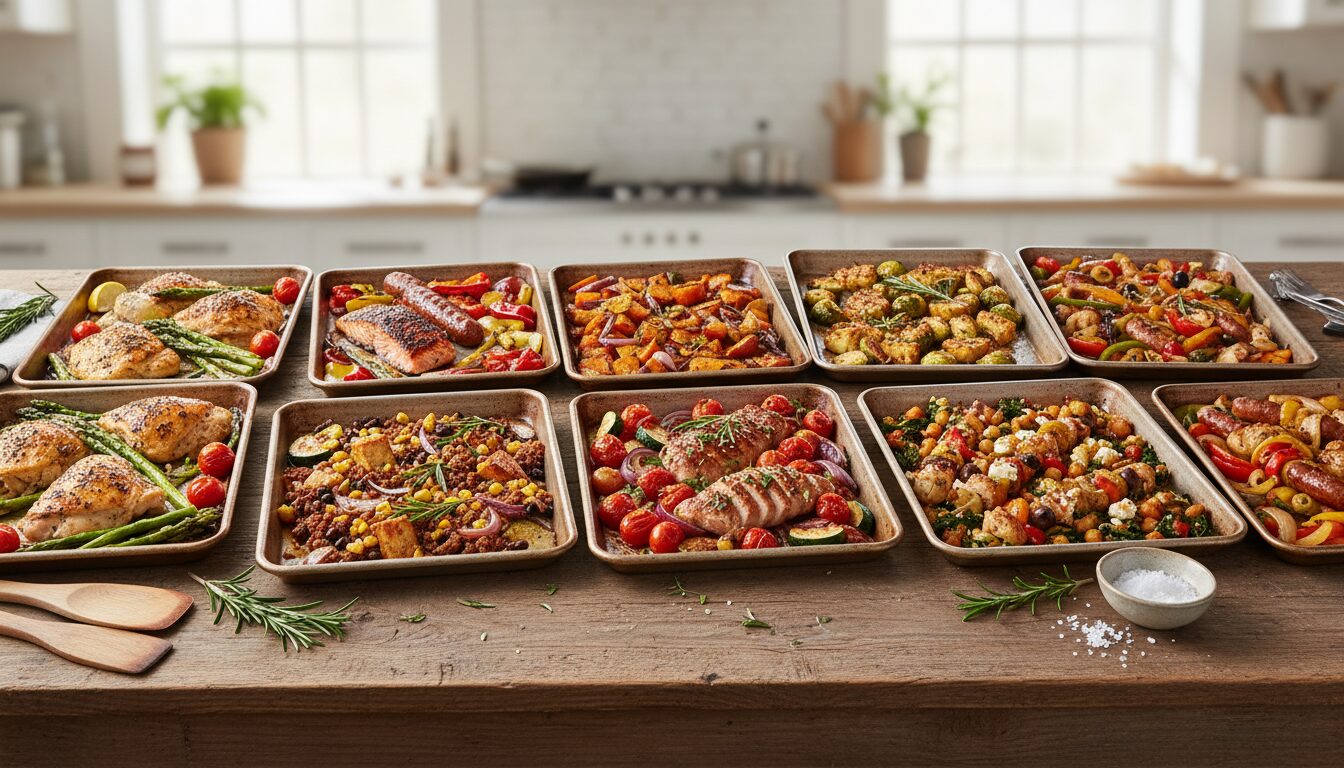
10 Easy Sheet Pan Dinner Recipes for Busy Weeknights in 2026

Sheet pan dinners are the ultimate solution for busy weeknights: toss your ingredients together, slide the pan into the oven, and let the heat do the work while you decompress from your day. These 10 easy sheet pan dinner recipes for busy weeknights in 2026 cover a range of proteins, vegetables, and flavor profiles so that every member of your household finds something to love. Whether you are cooking for one or feeding a family of five, each recipe below requires minimal prep, produces minimal dishes, and delivers maximum flavor through the magic of roasting.

Why Sheet Pan Dinners Work So Well

The science behind sheet pan cooking is straightforward. High, dry oven heat triggers the Maillard reaction, the chemical process responsible for the golden-brown crust that makes roasted vegetables and proteins taste deeply savory. Because everything cooks on one surface, the rendered juices from your protein baste your vegetables automatically, creating layered flavor without any extra effort on your part.

According to Serious Eats, temperatures above 280 degrees Fahrenheit are needed to trigger the Maillard reaction effectively, which is why most sheet pan recipes call for oven temperatures between 400 and 450 degrees Fahrenheit. That range also happens to be ideal for cooking most vegetables and proteins simultaneously, making the timing far more forgiving than stovetop cooking.

Beyond the science, sheet pan meals simply fit modern schedules. Prep time for most of these recipes is under 15 minutes, and cleanup involves little more than soaking a single pan.

Key Takeaway: The single most important factor in successful sheet pan cooking is not overcrowding the pan. Ingredients that are too close together steam rather than roast, leaving you with soft, pallid results instead of caramelized, flavorful ones. Use two pans if necessary.

Essential Equipment Before You Start

You do not need a fully stocked kitchen to make these recipes, but a few specific tools make a meaningful difference in your results.

  • Half-sheet pans: The standard 18-by-13-inch size is ideal for most family-sized recipes. Nordic Ware’s Natural Aluminum Baker’s Half Sheet is a longtime professional and home-cook favorite for its even heat distribution and durability.
  • Parchment paper or silicone mats: Lining your pan prevents sticking and makes cleanup nearly effortless. Silpat baking mats are reusable and reduce waste over time.
  • Instant-read thermometer: Guessing whether your chicken is cooked through is a recipe for disappointment or food safety issues. The ThermoWorks Thermapen One reads temperature in about one second and is the gold standard for home cooks.
  • A large mixing bowl: Tossing your ingredients in oil and seasoning before spreading them on the pan ensures even coating.

The 10 Recipes

1. Lemon Garlic Chicken Thighs with Roasted Broccoli

Bone-in, skin-on chicken thighs are the ideal sheet pan protein. The fat under the skin renders during roasting, basting the meat and crisping the exterior without any additional effort. Toss four thighs with olive oil, the juice and zest of one lemon, four minced garlic cloves, salt, and black pepper. Arrange them on one side of the pan. On the other side, spread two heads of broccoli cut into florets, also tossed in olive oil, salt, and a pinch of red pepper flakes. Roast at 425 degrees Fahrenheit for 35 to 40 minutes until the chicken skin is deeply golden and an instant-read thermometer reads 165 degrees Fahrenheit at the thickest part. Finish with fresh parsley.

2. Honey Sriracha Salmon with Snap Peas and Bell Peppers

Salmon fillets cook quickly, making this one of the fastest options on this list. Whisk together two tablespoons of honey, one tablespoon of Huy Fong Sriracha, one tablespoon of soy sauce, and a teaspoon of sesame oil. Coat four salmon fillets and arrange them alongside a mix of snap peas and sliced bell peppers tossed with a neutral oil and salt. Roast at 400 degrees Fahrenheit for 12 to 15 minutes. The glaze caramelizes beautifully and the vegetables stay crisp-tender. Serve over steamed jasmine rice.

3. Sausage and Peppers with Onions

This is arguably the easiest recipe on this list. Slice one pound of Italian sausage into rounds, then toss with three sliced bell peppers (use a mix of colors for visual appeal), two sliced onions, olive oil, Italian seasoning, salt, and black pepper. Spread in a single layer and roast at 425 degrees Fahrenheit for 25 to 30 minutes, tossing halfway through. Serve in hoagie rolls or over polenta. The caramelized onions alone are worth making this recipe on repeat.

4. Sheet Pan Shrimp Fajitas

Fajitas from a sheet pan produce a result that rivals anything you would get in a skillet, with far less attention required. Toss one pound of large peeled shrimp with three sliced bell peppers, one sliced red onion, two tablespoons of olive oil, and a tablespoon of fajita seasoning. Spread in a single layer and roast at 400 degrees Fahrenheit for 10 to 12 minutes. Shrimp cook fast, so watch them carefully. Serve in warm tortillas with sour cream, avocado, and lime wedges.

5. Balsamic Glazed Pork Tenderloin with Root Vegetables

Pork tenderloin is lean, cooks quickly, and absorbs marinades beautifully. Whisk three tablespoons of balsamic vinegar, one tablespoon of Dijon mustard, one tablespoon of olive oil, two cloves of garlic, and a teaspoon of fresh thyme. Coat a one-pound tenderloin and let it marinate for at least 20 minutes. Surround it on the pan with cubed sweet potatoes, parsnips, and red onion tossed in olive oil and rosemary. Roast at 425 degrees Fahrenheit for 25 to 30 minutes until the pork reaches 145 degrees Fahrenheit internally. Rest for five minutes before slicing.

6. Za’atar Roasted Chicken Legs with Chickpeas and Cherry Tomatoes

Za’atar, the Middle Eastern spice blend of dried herbs, sesame seeds, and sumac, creates an aromatic crust on chicken that feels restaurant-worthy with almost no effort. Rub chicken legs generously with za’atar mixed with olive oil, salt, and lemon zest. Scatter one can of drained chickpeas and a pint of cherry tomatoes around the chicken on the pan. The tomatoes burst and create a light, jammy sauce as they roast. Cook at 425 degrees Fahrenheit for 35 to 40 minutes. Serve with warm pita and a dollop of Greek yogurt.

7. Teriyaki Tofu with Edamame and Broccoli

This plant-based option is satisfying enough to please even committed meat-eaters. The key is pressing your tofu thoroughly before cooking to remove excess moisture, which allows it to crisp rather than steam. Cut one block of extra-firm pressed tofu into cubes, toss with store-bought or homemade teriyaki sauce, and spread on one side of the pan. On the other side, arrange broccoli florets and shelled edamame tossed with sesame oil, soy sauce, and garlic. Roast at 400 degrees Fahrenheit for 25 to 30 minutes, flipping the tofu halfway. Finish with sesame seeds and sliced scallions. Serve over brown rice.

8. Parmesan Crusted Tilapia with Asparagus and Tomatoes

White fish and asparagus have nearly identical cooking times, making them a natural pairing. Mix half a cup of panko breadcrumbs, a quarter cup of grated Parmesan, a tablespoon of olive oil, and a teaspoon of garlic powder. Press the mixture onto four tilapia fillets. Arrange the fish on one side of the pan and a bundle of asparagus spears plus a cup of halved cherry tomatoes on the other, both tossed lightly with olive oil and salt. Roast at 400 degrees Fahrenheit for 15 to 18 minutes until the crust is golden and the fish flakes easily. A squeeze of fresh lemon over everything at the end is non-negotiable.

9. Harissa Lamb Chops with Cauliflower and Golden Raisins

Lamb and harissa is a combination that feels sophisticated but comes together in under an hour. Rub four lamb loin chops generously with harissa paste, olive oil, and salt. Let them sit at room temperature for 15 minutes while you cut a head of cauliflower into florets and toss them with olive oil, cumin, salt, and a handful of golden raisins. Spread the cauliflower on the pan and nestle the chops on top. Roast at 425 degrees Fahrenheit for 20 to 25 minutes for medium doneness. Finish with chopped fresh mint and a drizzle of good olive oil. This recipe is elegant enough for guests yet simple enough for a Tuesday.

10. Sheet Pan Gnocchi with Burst Tomatoes and Italian Sausage

Shelf-stable gnocchi roasts directly on the pan, puffing up and developing crispy exteriors that are genuinely addictive. No boiling required. Toss one pound of shelf-stable gnocchi with two cups of cherry tomatoes, one pound of crumbled Italian sausage (removed from casings), two tablespoons of olive oil, two cloves of minced garlic, and a generous pinch of Italian seasoning. Spread across the pan and roast at 425 degrees Fahrenheit for 25 to 30 minutes, tossing once halfway. The tomatoes burst and coat the gnocchi in a natural sauce. Top with fresh basil and shaved Parmesan. This one consistently surprises people who have never roasted gnocchi before.

Recipe Comparison at a Glance

Recipe Prep Time Cook Time Oven Temp Protein Skill Level
Lemon Garlic Chicken Thighs 10 min 35-40 min 425F Chicken Beginner
Honey Sriracha Salmon 10 min 12-15 min 400F Fish Beginner
Sausage and Peppers 5 min 25-30 min 425F Pork Beginner
Shrimp Fajitas 10 min 10-12 min 400F Seafood Beginner
Balsamic Pork Tenderloin 15 min + marinating 25-30 min 425F Pork Intermediate
Za’atar Chicken Legs 10 min 35-40 min 425F Chicken Beginner
Teriyaki Tofu 20 min (pressing) 25-30 min 400F Plant-based Beginner
Parmesan Tilapia 10 min 15-18 min 400F Fish Beginner
Harissa Lamb Chops 15 min + resting 20-25 min 425F Lamb Intermediate
Sheet Pan Gnocchi 5 min 25-30 min 425F Pork/Vegetarian option Beginner

Pro Tips for Better Sheet Pan Dinners Every Time

Even the simplest recipes benefit from a few consistent habits. These tips apply across all 10 recipes above and to any sheet pan cooking you do in the future.

  • Cut vegetables to account for density: Dense vegetables like potatoes and sweet potatoes need smaller cuts than delicate ones like asparagus or cherry tomatoes. If you want everything to finish at the same time, cut harder vegetables smaller or give them a head start in the oven before adding faster-cooking ingredients.
  • Season aggressively: The oven is not forgiving of under-seasoning. Because some liquid always evaporates during roasting, flavors concentrate but salt and spices still need a generous hand up front.
  • Use the right oil: Olive oil is appropriate for most of these recipes. For high-heat roasting above 425 degrees Fahrenheit, consider avocado oil, which has a higher smoke point. The Serious Eats guide to cooking oils has a thorough breakdown of smoke points and flavor profiles.
  • Preheat the pan: Sliding your ingredients onto a hot pan rather than a cold one encourages immediate caramelization on the bottom surface, especially useful for vegetables and tofu.
  • Do not skip the flip: Most recipes benefit from one toss or flip at the halfway mark to expose all surfaces to direct heat.

Adapting These Recipes for Dietary Needs

Sheet pan dinners are exceptionally adaptable. Here is how to modify these recipes for the most common dietary needs without sacrificing flavor or convenience.

Gluten-free: Most of these recipes are naturally gluten-free or very close to it. The Parmesan tilapia uses panko, which you can swap for gluten-free breadcrumbs without any change in technique. The shrimp fajitas need gluten-free tortillas. The gnocchi recipe requires a gluten-free variety, and several good shelf-stable options are now widely available.

Dairy-free: Only two recipes here include dairy as a core component. The Parmesan tilapia can be made with nutritional yeast in place of Parmesan for a similarly savory, umami-rich crust. The Za’atar chicken is served with Greek yogurt as a garnish, which you can simply omit or replace with a coconut-based yogurt alternative.

Lower carbohydrate: Swap starchy vegetables like sweet potatoes for lower-carb alternatives like cauliflower, zucchini, or green beans in any of these recipes. The gnocchi recipe is the only one that is inherently carbohydrate-heavy and does not translate well to a low-carb adaptation without fundamentally changing the dish.

Meal prep considerations: Most of these recipes store well in the refrigerator for three to four days. The seafood recipes (salmon, shrimp, tilapia) are best eaten within two days. According to the FoodSafety.gov cold food storage guidelines, cooked seafood should be refrigerated and consumed within two days for optimal safety and quality. Reheat sheet pan leftovers in a 350-degree oven for 10 minutes rather than the microwave to restore some of the original texture.

Frequently Asked Questions

Can I use frozen vegetables in sheet pan dinners?

You can, but the results will differ from fresh. Frozen vegetables contain more water and tend to steam rather than roast, producing a softer texture with less browning. If you prefer to use frozen vegetables, spread them out very generously on the pan and pat them as dry as possible before seasoning. Increase your oven temperature by 25 degrees and expect some liquid to pool on the pan during the first half of cooking. Fresh vegetables consistently produce superior texture in roasted applications.

Why are my roasted vegetables coming out soggy instead of crispy?

The most common culprit is overcrowding. When vegetables are packed tightly, moisture released during cooking cannot evaporate quickly enough and the vegetables steam in their own liquid instead of roasting in dry heat. Use two pans if needed and ensure ingredients are in a single, uncrowded layer. Using too little oil can also contribute to steaming rather than browning, so coat your vegetables thoroughly.

What is the best way to prevent chicken from sticking to the pan?

Line your pan with parchment paper or a silicone mat for a reliable non-stick surface. Alternatively, make sure the chicken is well coated in oil before placing it on the pan. If you are using bone-in, skin-on pieces, the rendering fat will naturally prevent sticking once the skin has had a few minutes to release. Resist the urge to move the chicken too early. Like a good sear on a stovetop, the protein will release from the pan naturally once it has developed a crust.

How do I cook proteins with very different cooking times on the same pan?

The solution is staggered additions. Start your longer-cooking items (dense vegetables, bone-in chicken) in the oven first, then add faster-cooking components (shrimp, thin fish fillets, cherry tomatoes) partway through. The comparison table above gives you the cook times for each recipe, which can guide you when you want to mix and match. Checking with an instant-read thermometer removes all guesswork from the equation.

Are sheet pan dinners actually budget-friendly?

Sheet pan cooking is genuinely cost-effective for several reasons. Using cheaper cuts like chicken thighs instead of breasts, combining proteins with large amounts of vegetables, and stretching meals across multiple servings all reduce per-portion costs. Additionally, the versatility of sheet pan cooking makes it easy to use up produce before it spoils, which reduces food waste. The USDA tracks food loss data and consistently finds that households waste a significant portion of purchased food, much of which is produce. Sheet pan meals that use whole heads of broccoli, full bags of snap peas, or entire bunches of asparagus help address that pattern practically.

Final Thoughts

Sheet pan dinners represent one of the most practical cooking strategies available to busy people in 2026. The 10 recipes in this guide range from a five-minute prep sausage and pepper bake to a more considered harissa lamb chop dinner worthy of a weekend gathering. All of them share the core advantages of this style of cooking: minimal hands-on time, easy cleanup, and the deeply satisfying flavors that only high-heat roasting can produce.

Start with the recipes that match your comfort level and the ingredients you already have on hand. Once you are comfortable with the fundamental technique, you will find yourself inventing new combinations instinctively, because the method is far more flexible than any individual recipe. Keep a well-seasoned pan, a reliable thermometer, and a handful of pantry staples within reach, and weeknight dinners become far less of a burden than they used to be.

10 Easy Sheet Pan Dinner Recipes for Busy Weeknights in 2026
Scroll to top