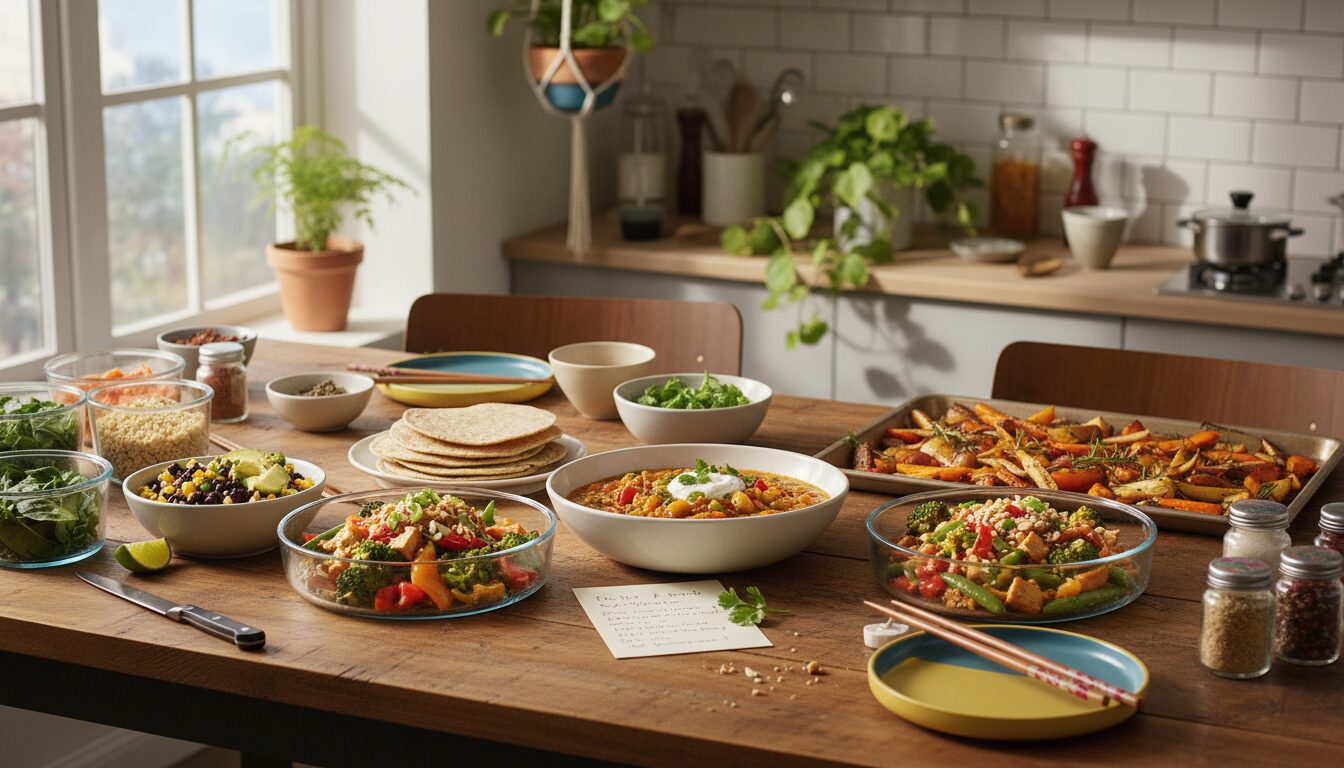
Easy vegetarian meals can be prepared in 15-30 minutes using simple pantry staples like lentils, quinoa, and canned beans, making plant-based cooking accessible for anyone regardless of experience level. The key to effortless vegetarian cooking is building a well-stocked pantry with versatile grains, legumes, and flavor enhancers that can create complete meals for under $5 per serving. One-pot cooking methods and strategic meal prep minimize cleanup time while ensuring nutritionally balanced, family-friendly meals that satisfy even meat-eating household members.
Table of Contents
- Quick Summary
- What makes a vegetarian meal truly easy to prepare
- How much time should an easy vegetarian meal take
- What pantry staples make vegetarian cooking effortless
- Quick vegetarian recipes for busy weeknights
- 15-minute vegetarian meals for extremely busy schedules
- One pot vegetarian meals that minimize cleanup
- Vegetarian dinner ideas that satisfy meat-eating family members
- Converting family favorite meat dishes to vegetarian versions
- Plant based dinners with hearty, filling proteins
- Budget-friendly vegetarian meal planning with cost breakdowns
- How to meal prep vegetarian dishes for under $5 per serving
- Seasonal vegetarian meal planning using 2026 produce availability
- Healthy vegetarian recipes with complete nutritional balance
- Ensuring adequate protein in beginner vegetarian recipes
- Kid-friendly vegetarian meals with hidden vegetables
- Meatless meal prep strategies for different dietary restrictions
- Gluten-free vegetarian meal prep approaches
- Storage and reheating tips for batch-cooked vegetarian meals
- Vegetarian cooking tips that speed up meal preparation
- Kitchen tools that make vegetarian cooking faster
- Batch cooking techniques for vegetarian family meals
Easy vegetarian meals combine simple ingredients, quick cooking methods, and minimal preparation time to create satisfying plant-based dishes that anyone can master, regardless of cooking experience.
Quick Summary
- Most easy vegetarian meals can be prepared in 15-30 minutes using common pantry staples
- One-pot cooking methods and meal prep strategies minimize cleanup and save time throughout the week
- Plant-based proteins like beans, lentils, and quinoa provide complete nutrition while keeping costs under $5 per serving
- Simple ingredient swaps can transform familiar meat-based dishes into satisfying vegetarian alternatives
- Strategic meal planning using seasonal produce maximizes both flavor and budget efficiency
What makes a vegetarian meal truly easy to prepare
A truly easy vegetarian meal requires minimal preparation time, uses readily available ingredients, and employs simple cooking techniques that don’t demand advanced culinary skills. Research from the USDA Economic Research Service shows that vegetarian dishes typically require 20% less active cooking time than meat-based meals, primarily because plant proteins don’t require the same food safety precautions as animal products.
The foundation of easy vegetarian cooking rests on three core principles: ingredient accessibility, technique simplicity, and time efficiency. Unlike complex meat preparations that often involve marinating, proper temperature monitoring, and extended cooking times, vegetarian meals can achieve depth of flavor through quick-cooking methods like sautéing, steaming, or one-pot preparations. For those interested in exploring other quick cooking methods, air fryer techniques for busy weeknights can complement vegetarian cooking perfectly.
Successful easy vegetarian meals also leverage the natural flavors and textures of vegetables, grains, and legumes rather than requiring elaborate seasoning or preparation techniques. This approach makes vegetarian cooking more approachable for beginners while delivering consistently satisfying results.
How much time should an easy vegetarian meal take
An easy vegetarian meal should require no more than 30 minutes of total time from start to finish, with ultra-quick options possible in 15 minutes or less. This timeframe includes both preparation and cooking, making weeknight dinner preparation realistic for busy households.
Breaking down time categories for quick vegetarian recipes:
– 15-minute meals: Simple pasta dishes, stir-fries, and grain bowls using pre-cooked ingredients
– 20-minute meals: One-pot rice and bean dishes, quick curries, and vegetable-based soups
– 30-minute meals: More complex preparations like stuffed vegetables, homemade pizza, or layered casseroles
These timeframes align perfectly with proven meal prep strategies that maximize efficiency throughout the week. Many vegetarian meals can be partially prepared in advance, reducing the actual cooking time to 15 minutes or less when you’re ready to eat.
What pantry staples make vegetarian cooking effortless
A well-stocked vegetarian pantry should include shelf-stable proteins, quick-cooking grains, and flavor enhancers that can create complete meals without requiring fresh ingredients shopping trips.
Essential pantry items for easy vegetarian cooking include canned beans and lentils, which provide protein and substance to any dish. Quick-cooking grains like quinoa, bulgur, and instant brown rice serve as nutritious bases, while pasta offers familiar comfort food appeal. Comprehensive plant-based protein sources extend beyond basic legumes to include items like hemp hearts, nutritional yeast, and protein-rich seeds.
Flavor enhancers are crucial for transforming simple ingredients into exciting meals. Stock your pantry with good olive oil, coconut milk, vegetable broth, and a variety of spices including cumin, paprika, garlic powder, and curry powder. Acidic ingredients like vinegars and citrus juice (which can be kept frozen) brighten vegetarian dishes instantly.
Quick vegetarian recipes for busy weeknights
Quick vegetarian recipes for busy weeknights focus on one-pot meals, minimal preparation techniques, and ingredients that cook rapidly while delivering maximum flavor and nutrition.
The key to successful weeknight vegetarian cooking lies in choosing recipes that can be executed from start to finish in 30 minutes or less. These recipes typically rely on quick-cooking proteins like eggs, tofu, or canned beans, paired with fast-cooking vegetables and grains that don’t require lengthy preparation.
15-minute vegetarian meals for extremely busy schedules
Ultra-quick 15-minute vegetarian meals rely on pre-cooked ingredients, minimal chopping, and high-heat cooking methods to deliver complete nutrition in record time.
For those particularly hectic evenings, these meals can complement other healthy dinner concepts in your weekly rotation. Simple pasta with garlic, olive oil, and canned white beans creates a protein-rich meal in under 15 minutes. Scrambled eggs with spinach and cheese served over toast provides complete protein and can be customized with whatever vegetables you have on hand.
Quick stir-fries using frozen vegetables, pre-cooked tofu, and instant brown rice deliver restaurant-quality results without the wait. The key is having ingredients prepped and ready, using high heat, and choosing vegetables that cook quickly like bell peppers, snap peas, and mushrooms.
One pot vegetarian meals that minimize cleanup
One-pot vegetarian meals combine all ingredients in a single cooking vessel, reducing cleanup time while allowing flavors to meld together naturally.
One-pot meals work exceptionally well for vegetarian cooking because plant-based ingredients often have similar cooking times and benefit from shared cooking liquids. Lentil and vegetable curry, pasta with vegetables cooked directly in the sauce, and rice-based dishes like vegetarian jambalaya all exemplify this approach.
Vegetarian dinner ideas that satisfy meat-eating family members
Satisfying vegetarian dinners for mixed households focus on familiar flavors, hearty textures, and protein-rich ingredients that provide the same satiety as meat-based meals.
The challenge of pleasing both vegetarians and meat-eaters in the same household requires strategic recipe selection that emphasizes comfort food elements and substantial proteins. Success comes from choosing dishes that don’t feel like they’re missing something, but rather stand on their own as complete, satisfying meals.
Converting family favorite meat dishes to vegetarian versions
Converting beloved meat dishes to vegetarian versions requires understanding the role meat plays in the original recipe and selecting plant-based alternatives that provide similar texture, protein content, and flavor absorption.
Successful conversions focus on maintaining the essential character of the original dish while substituting appropriate plant-based protein alternatives that complement the existing flavors. Classic dishes like spaghetti bolognese work beautifully with lentils or mushrooms, while tacos can be filled with seasoned black beans or crumbled tofu.
The key to successful conversion lies in seasoning the plant-based proteins appropriately and ensuring they provide similar textural satisfaction. Ground meat substitutes work well in dishes where the meat is crumbled or chopped, while whole protein sources like portobello mushrooms can replace steaks or chicken breasts.
Plant based dinners with hearty, filling proteins
Hearty plant-based dinners combine multiple protein sources and substantial textures to create meals that satisfy hunger and provide complete amino acid profiles.
Building satisfying plant-based dinners requires understanding protein combining and selecting ingredients that provide both nutritional completeness and physical satiety. Dishes featuring quinoa with black beans, lentil shepherd’s pie topped with mashed potatoes, and chickpea curry with brown rice all provide substantial protein while delivering comfort food satisfaction.
Budget-friendly vegetarian meal planning with cost breakdowns
Budget-friendly vegetarian meal planning leverages the naturally lower cost of plant proteins while maximizing nutritional value through strategic ingredient selection and bulk cooking methods.
Vegetarian meals inherently cost less than meat-based alternatives because plant proteins typically cost 60-80% less per serving than animal proteins. However, smart planning and shopping strategies can reduce costs even further while maintaining nutritional quality and meal satisfaction.
How to meal prep vegetarian dishes for under $5 per serving
Creating vegetarian meals for under $5 per serving requires focusing on bulk ingredients like dried beans and grains, seasonal produce, and batch cooking techniques that maximize efficiency.
Achieving the $5 per serving target becomes realistic when building meals around affordable protein sources like dried beans (which cost approximately $0.50 per serving when cooked), bulk grains, and seasonal vegetables. Large batch cooking allows you to take advantage of bulk pricing while creating multiple meals from single cooking sessions.
Seasonal vegetarian meal planning using 2026 produce availability
Seasonal meal planning reduces grocery costs by 30-40% while ensuring peak flavor and nutritional content by aligning recipes with natural produce availability cycles.
Planning vegetarian meals around seasonal produce availability ensures you’re buying ingredients at their peak quality and lowest prices. Spring meals can focus on asparagus, peas, and early greens, while summer abundance allows for tomato-based dishes, zucchini preparations, and fresh herb combinations.
Healthy vegetarian recipes with complete nutritional balance
Nutritionally balanced vegetarian recipes ensure adequate protein, essential fatty acids, vitamins, and minerals through strategic ingredient combinations and diverse plant-based foods.
Creating nutritionally complete vegetarian meals requires understanding plant-based nutrition principles and ensuring each meal provides balanced macronutrients and essential micronutrients. This involves combining complementary proteins, including healthy fats, and incorporating a variety of colorful vegetables.
Ensuring adequate protein in beginner vegetarian recipes
Adequate protein in vegetarian recipes comes from combining complementary plant proteins and including protein-rich ingredients in every meal to meet daily requirements of 0.8-1 gram per kilogram of body weight.
Protein adequacy in vegetarian cooking doesn’t require complex calculations, but rather consistent inclusion of protein-rich ingredients in each meal. Combinations like rice and beans, quinoa with nuts, or hummus with whole grain bread provide complete amino acid profiles while offering familiar, satisfying flavors.
Kid-friendly vegetarian meals with hidden vegetables
Kid-friendly vegetarian meals successfully incorporate vegetables through familiar formats, appealing presentations, and strategic seasoning that masks vegetables within favorite dishes.
Making vegetarian meals appealing to children requires focusing on familiar flavors and presentations while gradually introducing new ingredients. Pasta dishes with pureed vegetable sauces, vegetarian “meatballs” made from lentils and vegetables, and smoothies that combine fruits with leafy greens all provide nutrition while appealing to young palates.
Meatless meal prep strategies for different dietary restrictions
Effective meatless meal prep accommodates various dietary restrictions through careful ingredient selection, separate preparation methods, and storage techniques that maintain food safety and quality.
Meal prep becomes more complex when accommodating multiple dietary restrictions within the same household, but strategic planning and flexible base recipes can streamline the process while ensuring everyone’s needs are met.
Gluten-free vegetarian meal prep approaches
Gluten-free vegetarian meal prep focuses on naturally gluten-free grains and proteins while preventing cross-contamination through dedicated preparation areas and storage containers.
Successful gluten-free vegetarian meal prep relies heavily on rice, quinoa, potatoes, and legumes as primary carbohydrate sources. These ingredients form the foundation for most meals, while vegetables and gluten-free seasonings provide variety and flavor.
Storage and reheating tips for batch-cooked vegetarian meals
Proper storage and reheating of vegetarian meals maintains food safety and quality through appropriate container selection, correct refrigerator and freezer temperatures, and gentle reheating methods.
Vegetarian meals often reheat better than meat-based dishes because vegetables and grains maintain their texture well when properly stored. Glass containers prevent staining and odor absorption, while proper portioning ensures quick, even reheating.
Vegetarian cooking tips that speed up meal preparation
Efficient vegetarian cooking techniques include ingredient prep shortcuts, time-saving cooking methods, and kitchen organization strategies that reduce active cooking time while maximizing flavor development.
Streamlining vegetarian meal preparation involves both technique improvements and strategic kitchen setup. Understanding which vegetables cook at similar rates, how to layer flavors efficiently, and when to use shortcuts can dramatically reduce cooking time without sacrificing quality.
Kitchen tools that make vegetarian cooking faster
Essential kitchen tools for faster vegetarian cooking include sharp knives, food processors, pressure cookers, and quality non-stick pans that reduce cooking times and simplify preparation.
Investing in quality kitchen tools pays dividends in reduced cooking time and improved results. A sharp chef’s knife makes vegetable preparation significantly faster, while a food processor can quickly chop vegetables, make pesto, or prepare vegetarian patties. Consider exploring innovative kitchen gadgets that can further streamline your vegetarian cooking process.
Batch cooking techniques for vegetarian family meals
Successful batch cooking for vegetarian family meals involves preparing versatile base ingredients that can be combined in different ways throughout the week, reducing daily cooking time while maintaining meal variety.
Batch cooking works particularly well for vegetarian meals because many plant-based ingredients maintain quality when stored and reheated. Cooking large batches of grains, roasted vegetables, and basic proteins like beans or tofu provides building blocks for multiple meals throughout the week.