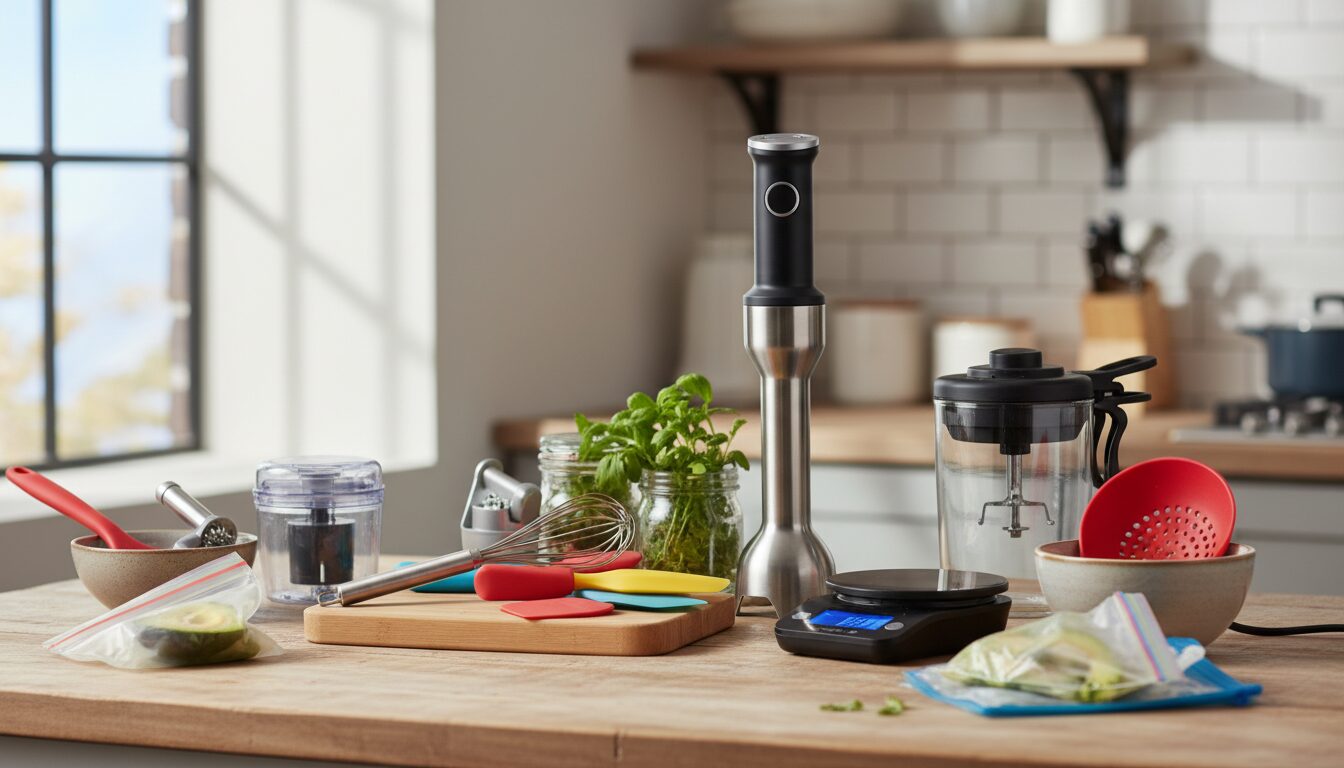
The most useful gadgets in the kitchen are multi-functional tools that solve real cooking problems and get used regularly, with professional chefs recommending quality basics like a sharp chef’s knife, cutting board, digital scale, and instant-read thermometer over trendy single-use gadgets. Research shows the average household owns 47 kitchen gadgets but only uses 12 regularly, making it crucial to evaluate purchases based on frequency of use, versatility, and storage efficiency. Focus on investing in a few high-quality, durable tools rather than accumulating numerous specialty gadgets that will likely sit unused in drawers.
Table of Contents
- What Kitchen Gadgets Are Actually Worth Buying?
- How do you identify truly useful kitchen gadgets versus gimmicks?
- What kitchen tools do professional chefs recommend for home cooks?
- Which Kitchen Gadgets Under $10 Actually Work Well?
- What are the best budget kitchen gadgets on Amazon?
- How do cheap kitchen tools compare to expensive versions?
- What Are the Best Space-Saving Kitchen Gadgets for Small Kitchens?
- Which kitchen tools serve multiple functions effectively?
- How can you maximize counter space with smart gadget choices?
- What Kitchen Gadgets Work Best for People with Mobility Issues?
- Which adaptive kitchen tools improve accessibility?
- What ergonomic features should you look for in kitchen gadgets?
- Which Eco-Friendly Kitchen Gadgets Replace Wasteful Alternatives?
- What sustainable kitchen tools reduce plastic waste?
- How do reusable kitchen gadgets save money long-term?
- What Cool Kitchen Gadgets Make the Best Gifts?
- Which fun kitchen gadgets are perfect for cooking enthusiasts?
- What kitchen gadgets do beginners appreciate most as gifts?
- Kitchen Gadgets Comparison: Essential vs Nice-to-Have vs Avoid
- What Kitchen Gadgets Failed and Why Should You Avoid Them?
- Which popular kitchen gadgets have major design flaws?
- What lessons can we learn from failed kitchen gadget launches?
- Frequently Asked Questions About Kitchen Gadgets
The most useful gadgets in the kitchen are tools that solve specific problems, get used regularly, and improve cooking efficiency without cluttering your space. Essential kitchen gadgets include a quality chef’s knife, cutting board, measuring cups, wooden spoons, and a reliable can opener – items that professional chefs consistently recommend for their versatility and daily utility.
Quick Summary:
– Focus on multi-functional kitchen tools that serve multiple purposes rather than single-use gadgets
– Budget-friendly options under $10 can perform just as well as expensive alternatives for basic tasks
– Space-saving and ergonomic designs benefit small kitchens and users with mobility challenges
– Sustainable kitchen gadgets reduce waste while saving money long-term
– Professional chefs prioritize sharp, durable tools over trendy novelty items
In This Article:
1. What Kitchen Gadgets Are Actually Worth Buying?
2. Which Kitchen Gadgets Under $10 Actually Work Well?
3. What Are the Best Space-Saving Kitchen Gadgets for Small Kitchens?
4. What Kitchen Gadgets Work Best for People with Mobility Issues?
5. Which Eco-Friendly Kitchen Gadgets Replace Wasteful Alternatives?
6. What Cool Kitchen Gadgets Make the Best Gifts?
7. Kitchen Gadgets Comparison: Essential vs Nice-to-Have vs Avoid
8. What Kitchen Gadgets Failed and Why Should You Avoid Them?
9. Frequently Asked Questions About Kitchen Gadgets
What Kitchen Gadgets Are Actually Worth Buying?
The key to distinguishing essential kitchen tools from clutter lies in evaluating frequency of use, versatility, and problem-solving capability. According to consumer research, the average household owns 47 kitchen gadgets but uses only 12 regularly, with 35 items sitting unused in drawers and cabinets.
To identify truly valuable gadgets in the kitchen, consider these five evaluation criteria. For a comprehensive list of essential gadgets for kitchen use, focus on tools that check multiple boxes:
- Daily or weekly usage potential – Will you reach for this tool multiple times per week?
- Multi-functionality – Does it serve more than one cooking purpose effectively?
- Storage efficiency – Can it be stored without monopolizing precious cabinet space?
- Durability and build quality – Will it withstand regular use for years?
- Problem-solving necessity – Does it address a genuine cooking challenge you face?
How do you identify truly useful kitchen gadgets versus gimmicks?
Useful kitchen gadgets solve recurring problems and integrate seamlessly into existing cooking workflows. Gimmicky gadgets typically promise dramatic time savings but deliver limited functionality, poor build quality, or impractical storage requirements.
The most effective approach involves analyzing your actual cooking patterns rather than aspirational ones. If you make pasta dishes twice a week, a quality pasta pot with built-in strainer justifies its space. Whether you’re preparing vegetarian meals with pasta or traditional dishes, the right tools can significantly improve your cooking efficiency. However, a specialized egg separator that you might use monthly doesn’t warrant drawer space when a clean hand or shell works equally well.
Professional kitchen designers recommend the “30-day test” – if you don’t naturally reach for a gadget within a month of purchase, it likely doesn’t address a genuine need. Quality indicators include:
- Stainless steel or food-grade materials over plastic when possible
- Intuitive operation without complex setup
- Easy cleaning with standard dishwashing methods
- Compact design that fits existing storage solutions
- Positive reviews from verified purchasers after 6+ months of use
What kitchen tools do professional chefs recommend for home cooks?
Professional chefs consistently prioritize sharp, durable basics over specialty gadgets when recommending tools for home kitchens. The core recommendations focus on versatile implements that handle 80% of cooking tasks efficiently.
Top chef recommendations include:
Essential Cutting Tools:
– 8-10 inch chef’s knife (high-carbon stainless steel)
– Paring knife for detailed work
– Large cutting board (wood or high-quality plastic)
– Knife sharpener or honing steel
Measurement and Temperature:
– Digital kitchen scale (accurate to 1 gram)
– Instant-read thermometer
– Measuring cups and spoons (stainless steel preferred)
– Liquid measuring cups with clear markings
Cooking Essentials:
– Cast iron or stainless steel skillets (10-12 inch)
– Heavy-bottomed saucepans in multiple sizes
– Wooden spoons and silicone spatulas
– Tongs for versatile food handling
– Fine-mesh strainer for multiple uses
Chefs emphasize that investing in fewer, higher-quality tools delivers better results than accumulating numerous mediocre gadgets. A sharp knife handles tasks that multiple specialized cutters promise to simplify, while a quality skillet outperforms several single-purpose pans.
Which Kitchen Gadgets Under $10 Actually Work Well?
Budget-friendly kitchen gadgets under $10 can deliver exceptional value when chosen strategically, often matching the performance of expensive alternatives for basic functions. The key lies in identifying simple, well-designed tools that focus on core functionality rather than premium materials or brand prestige.
Effective budget gadgets share common characteristics: straightforward mechanisms, durable construction despite lower cost, and designs that prioritize function over aesthetics. Many professional kitchens rely on inexpensive versions of everyday tools because reliability and ease of replacement matter more than luxury finishes.
What are the best budget kitchen gadgets on Amazon?
The most effective budget kitchen gadgets on Amazon focus on solving specific problems with simple, reliable designs that have earned thousands of positive reviews. Top-performing options consistently deliver functionality that rivals products costing 3-5 times more.
Under $5 Winners:
– Silicone spatula sets (heat-resistant, flexible)
– Microplane zester/grater (professional-quality results)
– Digital kitchen timer (multiple timers, loud alarm)
– Vegetable peeler with comfortable grip
– Measuring spoon sets (stainless steel, nested design)
$5-10 Range Champions:
– Instant-read thermometer (accuracy within 1 degree)
– Kitchen shears with multiple functions
– Collapsible colander for space-saving storage
– Non-slip cutting board with juice groove
– Silicone oven mitts (better heat protection than fabric)
Performance Indicators to Check:
– Minimum 1,000 reviews with 4+ star average
– Recent reviews confirming durability after months of use
– Materials specifications (food-grade silicone, stainless steel components)
– Clear return/replacement policies
– Brand responsiveness to customer issues
How do cheap kitchen tools compare to expensive versions?
Cheap kitchen tools often match expensive versions in core functionality, with differences primarily in materials, aesthetics, and longevity rather than immediate performance. The value equation depends heavily on usage frequency and specific tool categories.
Where Budget Tools Excel:
– Basic measuring tools (accuracy standards are regulated)
– Simple mechanical devices (peelers, can openers, timers)
– Silicone implements (material performance is consistent across price ranges)
– Single-function gadgets used occasionally
Where Premium Tools Justify Cost:
– Knives (steel quality directly affects sharpness retention)
– Thermometers (precision and response time variations)
– Heavy-use appliances (motors, heating elements wear differently)
– Professional-grade tools for serious enthusiasts
Consumer testing reveals that 60% of kitchen tasks show no performance difference between budget and premium tools when comparing similar designs. The remaining 40% primarily involve precision instruments, heavy-duty applications, or frequent-use scenarios where material quality affects longevity.
What Are the Best Space-Saving Kitchen Gadgets for Small Kitchens?
Space-saving kitchen gadgets maximize functionality per square inch through collapsible designs, vertical storage solutions, and multi-purpose tools that replace several single-use items. Effective small kitchen organization prioritizes tools that nest, fold, or serve multiple functions without sacrificing performance.
Small kitchen efficiency depends on strategic tool selection rather than cramming standard gadgets into limited space. The most successful approaches involve rethinking traditional storage patterns and choosing implements designed specifically for compact environments.
Which kitchen tools serve multiple functions effectively?
The most effective multi-functional kitchen tools combine related tasks seamlessly while maintaining quality performance in each role. Successful combination tools share logical functionality overlap rather than forcing unrelated features together.
Top Multi-Function Winners:
Cutting and Prep:
– Mandoline slicers with multiple blade options (slicing, julienne, dicing)
– Kitchen shears that handle herbs, packaging, and food prep
– Cutting boards with built-in colanders and measuring marks
– Box graters with multiple surface textures and zesting capabilities
Cooking and Serving:
– Dutch ovens that function as stockpots, bread pans, and serving dishes
– Immersion blenders with whisk and chopper attachments
– Silicone spatulas with measurement markings
– Tongs with locking mechanisms and heat-resistant tips
Storage and Organization:
– Nesting bowl sets with mixing, serving, and storage capabilities
– Collapsible colanders that double as steamer baskets
– Measuring cup sets that nest completely
– Magnetic spice containers that mount on refrigerators or metal surfaces
The key to successful multi-function tools lies in choosing combinations that match your actual cooking patterns. If you frequently prepare slow cooked vegetarian meals, a Dutch oven with multiple capabilities becomes invaluable.
How can you maximize counter space with smart gadget choices?
Maximizing counter space requires prioritizing vertical storage, choosing appliances that store easily, and selecting tools that can be mounted or hung rather than taking up valuable work surface. Effective counter management treats horizontal space as premium real estate.
Smart counter space strategies focus on keeping daily-use items accessible while storing occasional-use gadgets efficiently. Professional kitchen designers recommend the “clean counter” principle – only items used multiple times weekly should claim permanent counter residence.
Vertical Storage Solutions:
– Magnetic knife strips on walls or refrigerator sides
– Hanging utensil racks with S-hooks for tools
– Under-cabinet storage for cutting boards and baking sheets
– Wall-mounted spice racks and small appliance shelves
Appliance Storage Strategies:
– Choose appliances that nest or stack (mixing bowls, measuring cups)
– Prioritize lightweight, compact versions of occasional-use items
– Consider appliance garages or roll-out shelves for easy access
– Use appliance carts that can move when counter space is needed
Hidden Storage Opportunities:
– Drawer organizers for flat tools (spatulas, whisks, timers)
– Inside cabinet doors for lightweight items
– Pull-out drawers in deep cabinets for easy access
– Ceiling-mounted pot racks in kitchens with adequate height
What Kitchen Gadgets Work Best for People with Mobility Issues?
Kitchen gadgets designed for mobility issues focus on reducing strain, improving grip, and enabling one-handed operation while maintaining cooking independence and safety. Adaptive kitchen tools address specific physical challenges through ergonomic design, lightweight materials, and intuitive operation mechanisms.
Effective adaptive kitchen design considers various mobility limitations including limited hand strength, restricted range of motion, balance issues, and fatigue management. The best adaptive tools feel natural to use while providing enhanced functionality for users with physical constraints.
Which adaptive kitchen tools improve accessibility?
Adaptive kitchen tools improve accessibility by reducing required force, providing stable bases, and enabling alternative operating methods that accommodate various physical limitations. The most successful adaptive tools maintain cooking quality while addressing specific mobility challenges.
Grip and Strength Assistance:
– Ergonomic handles with non-slip surfaces and enlarged grips
– Electric can openers that require minimal pressure
– Rocker knives for one-handed cutting with rocking motion
– Lever-style corkscrews that multiply force mechanically
– Jar openers with rubber grips and leverage assistance
Stability and Safety Features:
– Non-slip cutting boards with raised edges and suction feet
– Bowls with high sides and pour spouts for easier handling
– Pot stabilizers and pan handles with extended, heat-resistant grips
– One-handed cutting boards with corner guards and spikes
– Weighted utensils that provide better control and reduce tremor effects
Reaching and Mobility Aids:
– Reachers and grabbers for accessing high shelves safely
– Rolling carts that transport multiple items between work areas
– Adjustable-height work surfaces or pull-out counter extensions
– Lightweight cookware with helper handles on both sides
– Magnetic tools that attach to refrigerators for easy access
What ergonomic features should you look for in kitchen gadgets?
Effective ergonomic features in kitchen gadgets reduce strain through proper weight distribution, comfortable grip angles, and operation methods that work with natural body mechanics rather than against them. Quality ergonomic design considers sustained use patterns and repetitive motion impacts.
Professional occupational therapists recommend evaluating kitchen tools based on individual physical capabilities and cooking frequency. Features that help one person may create difficulties for another, making personalized assessment crucial for optimal tool selection.
Handle Design Priorities:
– Diameter between 1.25-1.5 inches for comfortable grip
– Non-slip textures that work when hands are wet or greasy
– Cushioned materials that reduce pressure points
– Angled designs that keep wrists in neutral positions
– Length proportions that balance leverage with control
Weight and Balance Considerations:
– Lightweight materials for tools requiring sustained holding
– Balanced weight distribution to reduce wrist strain
– Counterweighted handles on heavier implements
– Appropriate weight for task (some tools need heft for effectiveness)
– Easy-grip surfaces that don’t require excessive force
Operation Mechanisms:
– Spring-loaded tools that reduce repetitive gripping
– Ratcheting mechanisms that break heavy tasks into smaller increments
– One-handed operation capabilities for versatility
– Large, easy-to-read controls and markings
– Intuitive operation that doesn’t require complex movements
Which Eco-Friendly Kitchen Gadgets Replace Wasteful Alternatives?
Eco-friendly kitchen gadgets replace disposable items and reduce packaging waste through reusable designs, sustainable materials, and energy-efficient operation that delivers environmental benefits without sacrificing functionality. Effective sustainable kitchen tools focus on eliminating single-use items while maintaining convenience and performance.
Sustainable kitchen practices reduce environmental impact through strategic tool choices that minimize waste generation, energy consumption, and resource depletion. The most effective eco-friendly gadgets provide long-term value while supporting environmentally conscious cooking habits.
What sustainable kitchen tools reduce plastic waste?
Sustainable kitchen tools reduce plastic waste by replacing disposable items with durable alternatives, using renewable materials, and enabling plastic-free food storage and preparation methods. The most impactful changes target frequently used disposable items where reusable alternatives provide clear environmental benefits.
Food Storage Replacements:
– Silicone stretch lids and food covers instead of plastic wrap
– Glass containers with airtight seals replacing plastic storage
– Beeswax wraps for sandwich and produce storage
– Mesh produce bags for grocery shopping and storage
– Vacuum seal systems that extend food life without disposable packaging
Food Prep Alternatives:
– Bamboo cutting boards instead of plastic versions
– Stainless steel straws with cleaning brushes
– Cloth napkins and reusable paper towel alternatives
– Compost bins that reduce garbage bag usage
– Reusable coffee filters and tea infusers
Shopping and Transport:
– Insulated reusable bags for grocery transport
– Produce scales that reduce pre-packaged item purchases
– Bulk buying containers and dispensers
– Reusable water bottles with built-in filters
– Shopping lists apps that reduce paper waste
How do reusable kitchen gadgets save money long-term?
Reusable kitchen gadgets save money long-term by eliminating recurring purchases of disposable items, reducing food waste through better storage, and providing durable functionality that outlasts cheaper alternatives. Cost savings accumulate significantly over time, with many reusable tools paying for themselves within 6-12 months of regular use.
Financial benefits extend beyond direct replacement costs to include reduced food spoilage, bulk buying opportunities, and decreased packaging waste disposal fees. When combined with high protein meal prep ideas that emphasize fresh ingredients and proper storage, sustainable tools can significantly reduce overall food costs.
Direct Cost Savings Examples:
– Reusable coffee filters save $50-100 annually versus disposable versions
– Glass food storage containers eliminate $200+ yearly plastic container purchases
– Cloth napkins replace $30-50 annual paper napkin costs
– Vacuum sealers reduce food waste by 30-50%, saving hundreds on groceries
– Water filtration systems eliminate $300+ bottled water expenses
Indirect Financial Benefits:
– Bulk purchasing enabled by proper storage containers
– Reduced food spoilage through better preservation methods
– Lower garbage disposal fees from decreased waste volume
– Energy savings from efficient appliances and cooking methods
– Avoided replacement costs through durable tool selection
Return on Investment Timeline:
– High-use items (coffee filters, food wraps): 2-4 months
– Medium-use items (storage containers, shopping bags): 6-12 months
– Low-use items (specialty tools, occasional appliances): 1-3 years
– Quality cookware and appliances: 3-10 years with proper care
What Cool Kitchen Gadgets Make the Best Gifts?
Cool kitchen gadgets make excellent gifts when they combine practical functionality with innovative design, introducing recipients to new cooking possibilities while solving common kitchen challenges. The best kitchen gadget gifts balance novelty with genuine utility, ensuring recipients will use them regularly rather than storing them away.
Effective gift selection considers the recipient’s cooking skill level, kitchen space, and culinary interests. Successful kitchen gadget gifts often introduce people to techniques or cuisines they haven’t explored while providing tools they might not purchase for themselves.
Which fun kitchen gadgets are perfect for cooking enthusiasts?
Fun kitchen gadgets for cooking enthusiasts focus on precision tools, specialized techniques, and innovative approaches that enhance culinary creativity and expand cooking capabilities. Enthusiasts appreciate gadgets that enable restaurant-quality results or introduce professional techniques to home kitchens.
Cooking enthusiasts typically own standard tools already, making specialized or upgraded versions ideal gifts. Focus on items that support their specific interests – whether that’s baking, international cuisines, or advanced cooking techniques.
Precision and Professional Tools:
– Sous vide immersion circulators for restaurant-quality proteins
– Digital scales with 0.1-gram precision for baking and cocktails
– Infrared thermometers for surface temperature monitoring
– pH meters for fermentation and advanced baking projects
– Precision timers with multiple countdown capabilities
Specialty Cooking Techniques:
– Smoking guns for adding smoky flavors without outdoor equipment
– Fermentation vessels with airlock systems
– Pasta machines with multiple attachment options
– Ice cream makers with compressor cooling systems
– Pressure cookers with advanced programming features
International Cuisine Tools:
– Wok accessories including spider strainers and ladles
– Tagine pots for North African cooking methods
– Sushi-making kits with bamboo mats and specialty knives
– Indian spice grinders and traditional cookware
– Mexican molcajetes and tortilla presses
These tools work particularly well when paired with cookbooks or online courses that teach associated techniques. Whether someone is exploring vegetarian crockpot meals or advanced baking methods, the right specialized tool can unlock new culinary possibilities.
What kitchen gadgets do beginners appreciate most as gifts?
Beginning cooks appreciate kitchen gadget gifts that simplify basic techniques, provide confidence in cooking fundamentals, and include clear instructions or guidance for proper use. Beginner-friendly gifts focus on building essential skills rather than advanced techniques.
New cooks benefit most from tools that make basic tasks easier and more successful, building confidence through consistent results. Avoid overly complex gadgets that might intimidate beginners or require extensive learning curves.
Essential Building Blocks:
– Quality chef’s knife with basic cutting technique guide
– Non-stick cookware sets with heat-resistant utensils
– Digital meat thermometer with temperature guide reference
– Measuring cup and spoon sets with conversion charts
– Basic spice sets with usage suggestions and recipes
Confidence-Building Tools:
– Slow cookers with simple recipe books for hands-off cooking
– Rice cookers that eliminate timing guesswork
– Digital kitchen scales with easy unit conversion
– Timer systems that prevent overcooking
– Non-slip cutting boards with measurement guides
Learning-Focused Gifts:
– Cookbook and tool combinations for specific cuisines
– Online cooking class subscriptions with equipment lists
– Kitchen starter kits with basic tools and instruction guides
– Recipe organizers and meal planning systems
– Ingredient identification guides and storage tips
When gifting to beginners, include resources that explain proper use and care. Whether they’re learning to prepare easy vegetarian meals or basic cooking fundamentals, educational components make tools more valuable and likely to be used regularly.
Kitchen Gadgets Comparison: Essential vs Nice-to-Have vs Avoid
Kitchen gadgets fall into three distinct categories based on utility, frequency of use, and value proposition: essential tools that enable basic cooking, nice-to-have items that enhance specific tasks, and gadgets to avoid due to poor design or limited functionality. Understanding these categories helps prioritize purchases and avoid kitchen clutter.
Effective kitchen tool evaluation considers both immediate functionality and long-term value, assessing whether each gadget solves genuine problems or merely promises convenience. Professional chefs and cooking instructors consistently recommend focusing on essential tools first, adding specialized items only after mastering fundamental techniques.
ESSENTIAL TOOLS – Must Have for Basic Cooking:
Core Cutting and Prep:
– 8-10 inch chef’s knife (sharp, well-balanced)
– Large cutting board (wood or quality plastic)
– Paring knife for detailed work
– Kitchen shears for various cutting tasks
Basic Cookware:
– Large skillet or frying pan (10-12 inch)
– Medium saucepan with lid
– Large pot for pasta and stocks
– Baking sheet for roasting and baking
Measurement and Safety:
– Measuring cups and spoons
– Instant-read thermometer
– Basic timer
– Can opener
Essential Utensils:
– Wooden spoons
– Silicone spatulas
– Tongs
– Whisk
– Ladle
NICE-TO-HAVE TOOLS – Enhance Specific Tasks:
Specialized Prep:
– Mandoline slicer for uniform cuts
– Microplane grater for zesting and fine grating
– Salad spinner for cleaning greens
– Kitchen scale for precise measurements
Cooking Enhancement:
– Cast iron skillet for specific techniques
– Stand mixer for serious baking
– Food processor for large prep tasks
– Immersion blender for soups and sauces
Storage and Organization:
– Vacuum sealer for food preservation
– Quality food storage containers
– Spice organization systems
– Knife block or magnetic strip
AVOID – Poor Value or Design Flaws:
Single-Use Gadgets:
– Banana slicers and avocado tools (knife works better)
– Egg separators and strawberry hullers (unnecessary)
– Single-function herb scissors
– Specialized cake slicers
Poorly Designed Items:
– Flimsy plastic tools that break easily
– Overly complex gadgets with multiple failure points
– Items requiring extensive cleaning for simple tasks
– Gadgets that take more time than manual methods
Storage Nightmares:
– Large appliances used less than monthly
– Tools with multiple loose parts
– Items requiring special cleaning or maintenance
– Gadgets that don’t nest or store efficiently
What Kitchen Gadgets Failed and Why Should You Avoid Them?
Failed kitchen gadgets share common design flaws including overcomplicated mechanisms, poor material quality, limited functionality, and impractical storage requirements that make them less effective than simple manual alternatives. Understanding failure patterns helps identify similar problems in new products before purchase.
Kitchen gadget failures often result from prioritizing marketing appeal over practical functionality, leading to tools that promise dramatic improvements but deliver frustrating user experiences. Consumer feedback consistently reveals that the most successful kitchen tools focus on doing one thing exceptionally well rather than attempting multiple mediocre functions.
Which popular kitchen gadgets have major design flaws?
Popular kitchen gadgets with major design flaws typically suffer from poor material quality, overly complex mechanisms, difficult cleaning requirements, or safety concerns that make them impractical for regular use. These issues often become apparent only after extended use, making initial reviews potentially misleading.
Common design flaws include mechanisms with multiple failure points, materials that degrade quickly with normal use, and cleaning requirements that discourage regular use. Understanding these patterns helps identify similar problems in new products before committing to purchase.
Overly Complex Mechanisms:
– Multi-blade herb scissors that clog and become difficult to clean
– Vegetable dicers with numerous small parts that break or get lost
– Automatic stirring devices that require more setup time than manual stirring
– Electric spice grinders with complex adjustment mechanisms
Poor Material Choices:
– Plastic tools that crack under normal heat exposure
– Thin metal implements that bend during regular use
– Non-stick coatings that peel off quickly
– Rubber components that harbor bacteria or develop odors
Cleaning and Maintenance Issues:
– Appliances with unreachable crevices that trap food
– Tools requiring disassembly for proper cleaning
– Items that cannot be dishwasher cleaned despite marketing claims
– Gadgets requiring special cleaning solutions or tools
Safety and Durability Concerns:
– Sharp tools without adequate safety guards
– Electrical items with insufficient insulation
– Tools that become unstable during normal use
– Items with small parts that pose choking hazards
What lessons can we learn from failed kitchen gadget launches?
Failed kitchen gadget launches reveal the importance of thorough user testing, realistic functionality claims, and focusing on genuine problem-solving rather than novelty marketing. Successful products emerge from understanding real cooking challenges and delivering practical solutions.
Market failures often result from developing products based on perceived problems rather than actual user needs, leading to solutions that don’t align with real cooking workflows. The most valuable lessons focus on prioritizing user experience over technical complexity.
Key Failure Patterns:
Problem Definition Errors:
– Solving problems that don’t exist for most home cooks
– Overestimating the complexity of manual alternatives
– Misunderstanding typical kitchen workflows and space constraints
– Focusing on speed over quality in food preparation
Design and Engineering Issues:
– Prioritizing features over fundamental functionality
– Using inadequate materials to hit specific price points
– Creating mechanisms too complex for reliable operation
– Insufficient testing under real-world conditions
User Experience Oversights:
– Ignoring cleaning and storage requirements
– Underestimating learning curves for complex tools
– Failing to consider safety implications of normal use
– Creating tools that work well initially but degrade quickly
Success Principles from Failure Analysis:
– Simple mechanisms outperform complex ones for reliability
– Quality materials justify higher prices for frequently used tools
– Easy cleaning encourages regular use and satisfaction
– Solving genuine problems creates lasting value
– Thorough testing reveals issues before market launch
Frequently Asked Questions About Kitchen Gadgets
What kitchen gadgets are worth the money?
Kitchen gadgets worth the money include quality chef’s knives, instant-read thermometers, digital kitchen scales, and heavy-duty cookware that get used regularly and solve specific cooking challenges. Focus on multi-functional tools rather than single-use gadgets.
What kitchen gadgets do I actually need?
Essential kitchen gadgets include a sharp chef’s knife, cutting board, measuring cups and spoons, wooden spoons, silicone spatulas, tongs, can opener, and instant-read thermometer. These tools handle 80% of common cooking tasks effectively.
Are expensive kitchen gadgets better than cheap ones?
Expensive kitchen gadgets are better for precision instruments (thermometers, scales), frequently used tools (knives, cookware), and items requiring durability. However, many basic tools like measuring cups and timers perform equally well at lower price points.
What kitchen gadgets are a waste of money?
Waste-of-money kitchen gadgets include single-use tools like banana slicers, overly complex devices that are harder to use than manual methods, poorly made plastic tools that break quickly, and large appliances used less than monthly.
How do I organize kitchen gadgets in small spaces?
Organize kitchen gadgets in small spaces using vertical storage, magnetic strips, drawer organizers, and under-cabinet mounting systems. Choose multi-functional tools and store occasional-use items outside the kitchen when necessary.
What kitchen gadgets make the best gifts for beginners?
Best kitchen gadget gifts for beginners include quality chef’s knives with cutting guides, non-stick cookware sets, digital thermometers, measuring tools, slow cookers, and basic spice sets – items that build confidence and essential skills.
Are smart kitchen gadgets worth buying?
Smart kitchen gadgets are worth buying if they solve specific problems you face regularly and integrate well with your cooking habits. However, many smart features add complexity without proportional benefits for most home cooks.
What kitchen gadgets last the longest?
Longest-lasting kitchen gadgets include stainless steel tools, cast iron cookware, quality wooden utensils, mechanical tools without electrical components, and items from reputable manufacturers with good warranty support.
How often should I replace kitchen gadgets?
Replace kitchen gadgets when they no longer function safely or effectively – typically every 5-10 years for quality tools, sooner for heavily used items or cheaper alternatives. Sharp tools should be sharpened regularly rather than replaced.
What kitchen gadgets are essential for healthy cooking?
Essential gadgets for healthy cooking include digital scales for portion control, steamers for nutrient preservation, instant-read thermometers for food safety, and quality storage containers for meal prep and fresh ingredient preservation.