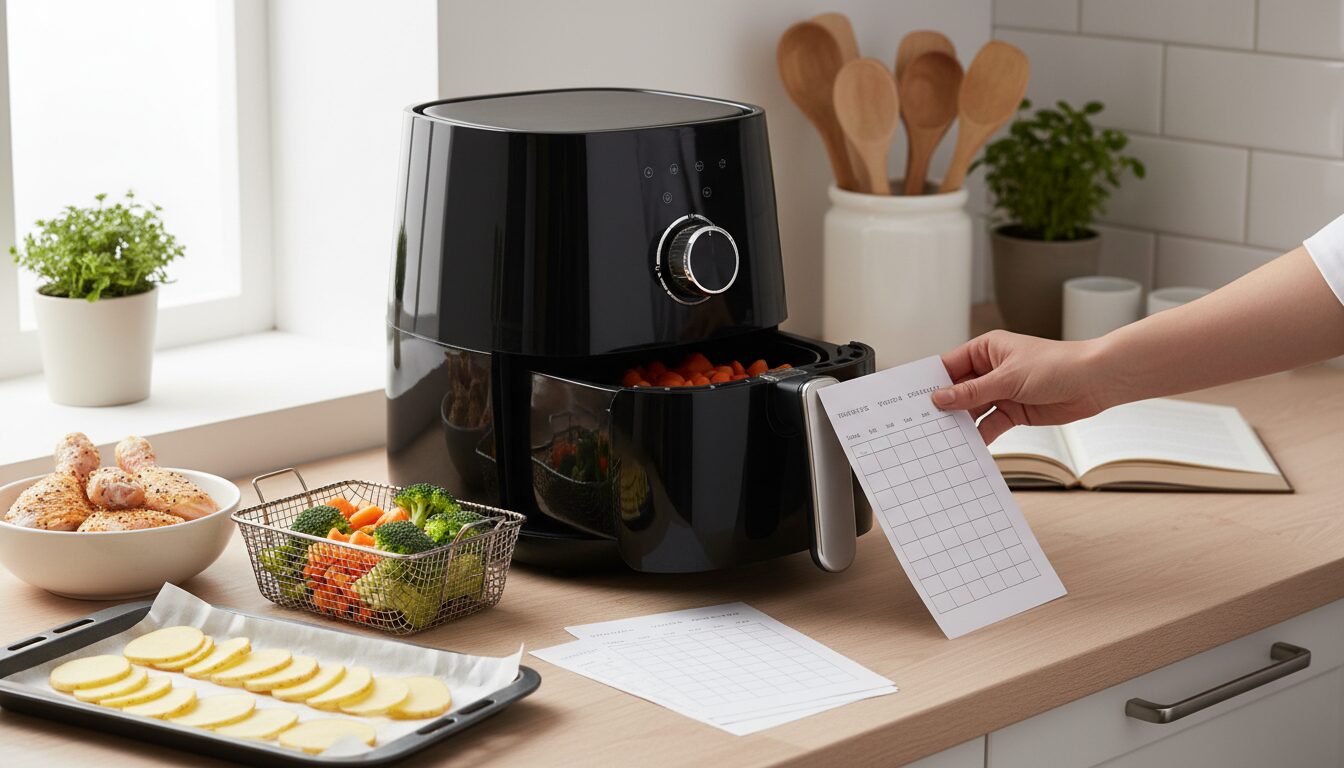
Mastering air fryer cooking comes down to understanding one core principle: an air fryer is essentially a compact convection oven that circulates hot air at high speed around your food, producing crispy results with far less oil than traditional frying. If you are new to this appliance, the good news is that the learning curve is genuinely short. Within a few sessions, you will understand the temperature ranges, timing adjustments, and simple prep habits that turn every meal into a reliable success. This guide walks you through everything from choosing the right machine to troubleshooting common problems, so you can cook with confidence from day one.
What Is an Air Fryer and How Does It Actually Work?
An air fryer is a countertop kitchen appliance that uses rapid air circulation technology, sometimes called Rapid Air Technology, to cook food. A heating element sits above the food basket, and a powerful fan pushes the hot air downward and around the food at high velocity. This constant movement of hot air mimics the effect of deep frying by creating a dry, intensely hot environment directly around the food’s surface.
The result is a Maillard reaction, which is the chemical browning process that gives fried and roasted foods their characteristic golden crust and savory depth of flavor. Because the air does the heavy lifting, you need only a light coating of oil, or sometimes no oil at all, to achieve that satisfying crisp texture.
Air fryers are not magic, though. They do not replicate the exact texture of foods submerged in hot oil, particularly for battered items that rely on a liquid coating. However, for a wide range of everyday foods, from chicken wings and vegetables to reheated leftovers and even baked goods, they deliver results that are genuinely impressive and considerably faster than a conventional oven.
Choosing the Right Air Fryer for Your Kitchen
Before you can master air fryer cooking, you need the right tool for your household size and cooking style. Air fryers broadly fall into two design categories: basket-style and oven-style.
Basket-style air fryers have a pull-out drawer with a perforated basket inside. They tend to heat up faster, take up less counter space, and are easier to shake food in during cooking. Popular options in this category include the Philips Premium Airfryer XXL and models from Cosori and Instant Brands.
Oven-style air fryers look like a small toaster oven with a glass door and wire rack trays. They offer more capacity and versatility, often including rotisserie and dehydrating functions. The Breville Smart Oven Air Fryer is a widely respected example in this category.
| Air Fryer Type | Best For | Capacity Range | Counter Space | Price Range (USD) |
|---|---|---|---|---|
| Compact Basket (1-2 qt) | Singles, small snacks | 1-2 quarts | Minimal | $30-$60 |
| Mid-Size Basket (4-5 qt) | Couples, small families | 4-5 quarts | Moderate | $60-$120 |
| Large Basket (6-8 qt) | Families of 4+ | 6-8 quarts | Moderate-Large | $100-$180 |
| Oven-Style | Versatile cooking, larger batches | 0.6-1 cu ft | Large | $150-$350 |
A practical rule of thumb: if you are cooking for one or two people, a four to five quart basket model handles most tasks without wasting energy on a larger unit. For families of four or more, stepping up to a six quart basket or an oven-style model prevents the constant need to cook in multiple batches.
Essential Air Fryer Techniques Every Beginner Must Know
Always Preheat the Air Fryer
Most modern air fryers reach cooking temperature in two to three minutes. Skipping the preheat step is the most common beginner mistake. When you place cold food into a cold basket, the appliance has to work harder, the cook time becomes unpredictable, and you often end up with uneven browning. Preheat your air fryer for three minutes at the target cooking temperature before adding food, exactly as you would with a conventional oven.
Do Not Overcrowd the Basket
Air fryers work by circulating hot air around food surfaces. If you stack food or pack the basket too tightly, you block that airflow and essentially steam the food instead of crisping it. Cook in a single layer whenever possible. For larger quantities, cook in batches and keep the first batch warm in a low oven while you finish the rest.
Use Oil Strategically
You do not need to drown food in oil, but a light, even coating makes a real difference in texture and flavor. Use a refillable oil mister or sprayer to apply a thin, consistent layer to food before cooking. Avoid aerosol cooking sprays that contain propellants like PAM, as these can degrade the non-stick coating on air fryer baskets over time according to many appliance manufacturers’ care guidelines.
Shake or Flip Food Midway Through
For basket-style air fryers, shaking the basket halfway through cooking ensures all sides of the food get exposed to direct airflow. For larger pieces like chicken thighs or salmon fillets, use tongs to flip them. This simple habit dramatically improves evenness and crispiness.
Pat Food Dry Before Cooking
Moisture is the enemy of crispiness. Before adding any protein or vegetable to the air fryer, pat it thoroughly dry with paper towels. Excess surface moisture turns to steam during cooking and prevents browning. This is especially important for chicken skin, tofu, and frozen vegetables that may have ice crystals on the surface.
Temperature and Timing: The Core of Air Fryer Mastery
Air fryer temperatures run hot compared to conventional oven settings. A commonly cited guideline in the culinary community is to reduce your standard oven recipe temperature by about 25 degrees Fahrenheit and reduce cooking time by roughly 20 percent when adapting a traditional recipe for the air fryer. However, always treat these as starting points and check your food a few minutes early until you know how your specific model behaves.
Here is a practical reference for common foods:
| Food | Temperature (F) | Time (Minutes) | Notes |
|---|---|---|---|
| Chicken Wings | 380-400 | 22-26 | Flip halfway, pat dry first |
| French Fries (fresh cut) | 375-390 | 18-22 | Shake every 5-6 minutes |
| Salmon Fillet (6 oz) | 375 | 10-12 | Skin side down, no flipping needed |
| Brussels Sprouts | 375 | 12-15 | Toss with oil and salt, shake once |
| Chicken Breast (boneless) | 370 | 18-22 | Use meat thermometer, target 165F internal |
| Frozen Mozzarella Sticks | 360 | 6-8 | Do not thaw, watch closely |
| Asparagus | 400 | 8-10 | Single layer, light oil coat |
| Reheated Pizza | 350 | 3-5 | Best reheating method for crispy crust |
One investment that genuinely transforms air fryer cooking is a reliable instant-read meat thermometer. The ThermoWorks Thermapen One is the professional standard, but more affordable options exist. Regardless of which you choose, always verify internal temperatures for poultry and pork. The USDA recommends a minimum internal temperature of 165 degrees Fahrenheit for poultry and 145 degrees for whole cuts of pork and beef.
The Best Foods to Cook in an Air Fryer (and a Few to Avoid)
Foods That Thrive in an Air Fryer
- Chicken pieces: Wings, thighs, and drumsticks get genuinely crispy skin in under 25 minutes.
- Root vegetables: Potatoes, sweet potatoes, parsnips, and carrots roast beautifully with minimal oil.
- Fish fillets: Delicate fish like cod, tilapia, and salmon cook evenly and quickly without drying out.
- Frozen convenience foods: Spring rolls, nuggets, fries, and mozzarella sticks come out far crispier than in a microwave.
- Tofu: Extra-firm tofu becomes genuinely chewy and crispy, a texture that is otherwise difficult to achieve without deep frying.
- Hard-boiled eggs: Cooking eggs at 250F for 15-17 minutes produces consistent results with easy-to-peel shells.
- Bacon: Cooks flat, evenly, and with dramatically less splatter than a pan.
Foods That Work Poorly in an Air Fryer
- Wet batters: Traditional beer batter or tempura batter drips through the basket before it sets, creating a mess and a disappointment.
- Large roasts over 4 pounds: The exterior dries out long before the interior reaches a safe temperature in most consumer models.
- Leafy greens: Spinach and similar leaves become airborne in the basket and get blasted against the heating element.
- Cheese by itself: Melts too quickly and drips before browning. Always coat or encase cheese before air frying.
- Popcorn: Air fryers do not reach the consistent and precise heat required to pop corn kernels reliably.
Cleaning and Maintaining Your Air Fryer
A clean air fryer is a safe and efficient air fryer. Built-up grease on the heating element or inside the unit can smoke during cooking and eventually become a fire hazard. Fortunately, maintenance is straightforward if you do it consistently after each use.
- Let it cool completely before cleaning. This takes about 30 minutes after cooking.
- Remove and soak the basket and drawer in warm, soapy water for 10 minutes. Most baskets are dishwasher-safe, but check your model’s manual first. Hand washing preserves the non-stick coating longer.
- Wipe the interior of the main unit with a damp cloth. Never submerge the main unit in water.
- Check the heating element every few uses by looking up into the top of the unit. Wipe any visible grease with a damp cloth once the unit is fully cool and unplugged.
- Avoid abrasive scrubbers on the basket coating. Use a soft sponge or a nylon brush like the OXO Good Grips Utility Brush for stubborn residue.
Common Air Fryer Mistakes and How to Fix Them
Even experienced cooks run into issues when they first pick up an air fryer. Here are the most frequent problems and their straightforward solutions.
Problem: Food is not getting crispy. The most common causes are overcrowding, too much moisture on the food’s surface, or insufficient oil. Address each one: cook in smaller batches, pat food completely dry before seasoning, and apply a light but even oil coat using a mister.
Problem: Food is burning on the outside but raw inside. You likely have the temperature too high. Lower the temperature by 25 degrees and increase the time. Thick cuts of protein in particular benefit from a lower, slower approach.
Problem: White smoke is coming from the air fryer. This usually means excess grease is dripping onto the heating element or pooling in the bottom drawer. Add a tablespoon or two of water to the bottom of the drawer (below the basket) when cooking fatty foods like bacon or sausages. This cools the dripping grease before it can smoke. If you see black smoke, turn the unit off immediately and check for food debris on the heating element.
Problem: Food is cooking unevenly. This is almost always an airflow issue. Shake the basket more frequently, ensure the basket is not overcrowded, and check that your air fryer is placed on a flat, stable surface with at least five inches of clearance behind and above the exhaust vent.
Problem: Food sticks to the basket. Either the basket’s non-stick coating is worn, or you are not using enough oil on certain foods that tend to stick, like fish or breaded items. Lightly spray the basket itself before adding food, and consider using perforated parchment paper liners designed for air fryers.
Frequently Asked Questions About Air Fryer Cooking
Do I need to use oil in an air fryer?
You do not always need oil, but using a small amount almost always improves the final texture and flavor. Foods that already contain natural fat, such as chicken thighs, sausages, or salmon, often cook beautifully with no added oil. Leaner foods, vegetables, and breaded items benefit significantly from a light spray of oil to achieve browning and crispiness. Think of oil as a tool you use intentionally rather than a requirement for every recipe.
Can I use aluminum foil or parchment paper in an air fryer?
Yes, with important caveats. Both aluminum foil and parchment paper can be used in an air fryer, but they must never block the airflow holes in the basket. Always place foil or paper beneath the food so the air can still circulate around and through the food. Never preheat the air fryer with foil or paper inside and no food on top, as the lightweight material can be blown upward into the heating element. Use parchment paper specifically designed with perforations for air fryers whenever possible, as these are sold by several brands and maintain good airflow while making cleanup easier.
How is an air fryer different from a convection oven?
The core technology is the same: both use a fan to circulate hot air. The key differences are scale and intensity. An air fryer is much smaller, which means the heating element is closer to the food and the fan creates more intense airflow in a confined space. This results in faster preheating, shorter cook times, and more aggressive surface browning compared to a full-size convection oven. A convection oven handles larger batches and is better suited to baking delicate items where gentler air movement is desirable. For a detailed technical comparison, the team at Serious Eats has explored this distinction thoroughly.
Is air fryer cooking actually healthier than deep frying?
Air fryer cooking uses significantly less oil than deep frying, which does reduce the overall fat content of many dishes. The Harvard Health Publishing team has noted that air frying can meaningfully reduce the fat in foods compared to deep frying, though the health impact ultimately depends on what you are cooking and how often you consume it. Air frying does not make an inherently unhealthy food into a health food, but it is a reasonable way to reduce added fat in everyday cooking without sacrificing texture or satisfaction.
Why does my air fryer smell like plastic when I first use it?
A faint plastic or chemical smell during the first few uses is common and generally harmless. It comes from manufacturing residues on the heating element and interior surfaces burning off during the initial heat exposures. Most manufacturers recommend running the air fryer empty at around 350-400F for 10 to 15 minutes in a well-ventilated area before cooking food for the first time. The smell should dissipate after one to three uses. If a strong smell persists beyond several cooking sessions, contact the manufacturer, as this may indicate a defect.
Taking Your Air Fryer Skills Further
Once you are comfortable with the basics, the air fryer becomes one of the most versatile tools in a home kitchen. You can bake small cakes and muffins, dehydrate herbs and fruit slices at low temperatures, make homemade croutons in under eight minutes, and even proof bread dough using the lowest temperature setting with the basket slightly ajar.
The key to continued improvement is keeping notes. After each cook, jot down the temperature, time, and any adjustments you made. Because air fryer models vary in power output and interior dimensions, your specific machine will develop its own personality that you will learn to work with over time. Brands like Cosori maintain active recipe blogs with model-specific guidance that can accelerate your learning curve considerably.
Ultimately, mastering the air fryer is less about following rigid rules and more about understanding the underlying logic: high heat, moving air, dry surfaces, and adequate space. Once those four principles are second nature, you can adapt almost any recipe and troubleshoot any problem with confidence.