Table of Contents
- Quick Summary
- Understanding Food Preservation Fundamentals
- Traditional Food Preservation Techniques
- Dehydration and Drying
- Salt Curing and Brining
- Fermentation
- Traditional Smoking
- Modern Food Preservation Methods
- Vacuum Sealing
- Freeze-Drying
- Pressure Canning
- Modified Atmosphere Packaging
- Essential Equipment and Maintenance Guide
- Critical Maintenance Tasks
- Troubleshooting Common Issues
- Seasonal Planning for Maximum Success
- Spring Preservation Activities
- Summer Peak Preservation
- Fall Harvest Preservation
- Winter Planning and Maintenance
- Food Safety and Common Mistakes to Avoid
- Critical Safety Parameters
- Common Safety Mistakes
- Altitude Adjustments
- Preservation Methods for Special Dietary Needs
- Gluten-Free Preservation
- Low-Sodium Alternatives
- Diabetic-Friendly Preservation
- Allergen Considerations
- Comparing Traditional vs Modern Approaches
- Nutrient Retention Comparison
- Cost Analysis
- Flavor and Texture Outcomes
- Cultural and Educational Value
- Recipes and Practical Applications
- Classic Fermented Vegetables
- Modern Vacuum-Sealed Preparations
- Pressure-Canned Stock
- Combination Method Applications
- Storage and Long-Term Management
- Optimal Storage Conditions
- Inventory Management Systems
- Quality Monitoring
- Long-Term Planning
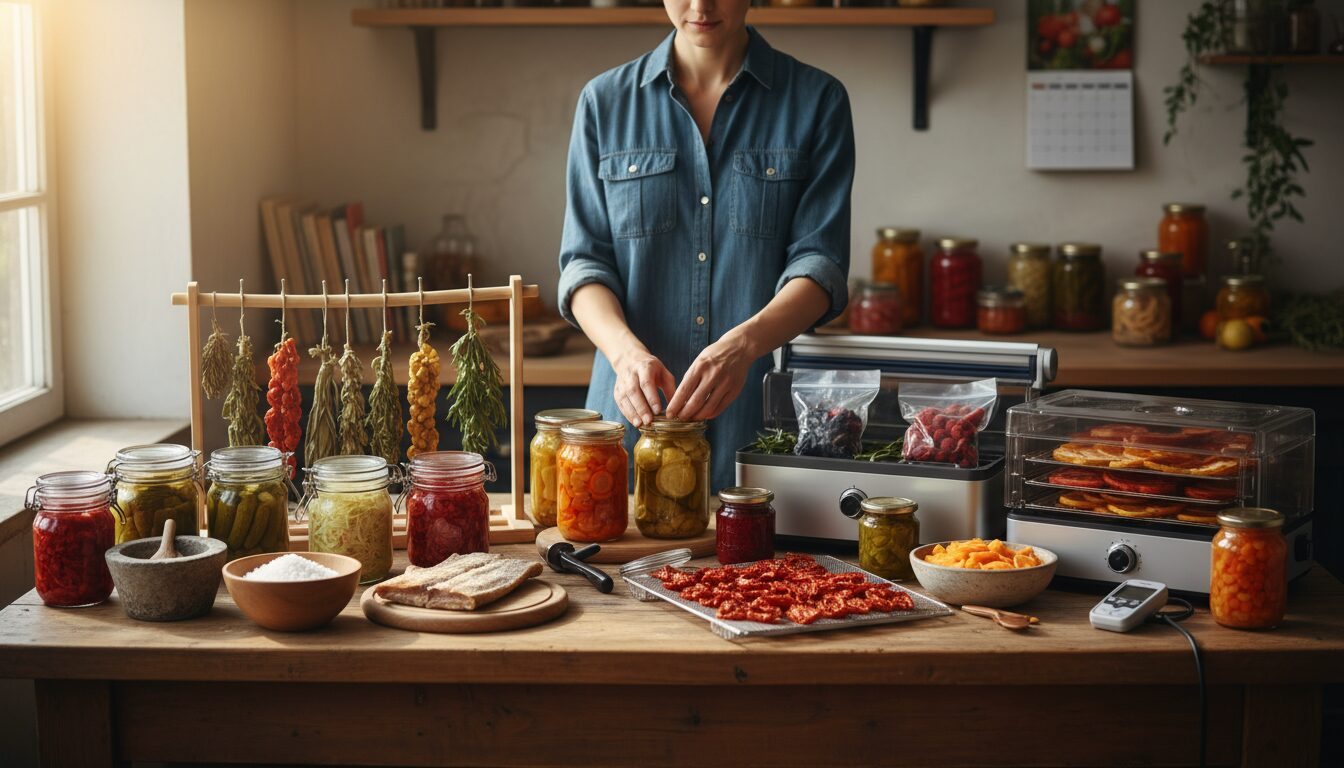
Food preservation encompasses various techniques used to extend the shelf life of food by preventing spoilage, maintaining nutritional value, and ensuring food safety through controlled methods that inhibit bacterial growth and enzymatic reactions.
Quick Summary
- Modern preservation methods like vacuum sealing and freeze-drying offer superior nutrient retention compared to traditional techniques
- Proper equipment maintenance is crucial for food safety, with dehydrators and pressure canners requiring regular calibration
- Seasonal timing maximizes preservation success, with peak harvest periods offering optimal nutrient density
- Safety protocols prevent common mistakes like inadequate processing temperatures and improper pH levels
- Multiple preservation methods can be combined for enhanced shelf stability and flavor variety
- Understanding Food Preservation Fundamentals
- Traditional Food Preservation Techniques
- Modern Food Preservation Methods
- Essential Equipment and Maintenance Guide
- Seasonal Planning for Maximum Success
- Food Safety and Common Mistakes to Avoid
- Preservation Methods for Special Dietary Needs
- Comparing Traditional vs Modern Approaches
- Recipes and Practical Applications
- Storage and Long-Term Management
Understanding Food Preservation Fundamentals
Food preservation works by controlling four key factors: temperature, moisture, oxygen, and pH levels to create environments where harmful bacteria cannot survive or multiply. The science behind preservation food techniques relies on understanding how microorganisms behave under different conditions.
The Centers for Disease Control and Prevention emphasizes that proper food preservation prevents foodborne illness while maintaining nutritional integrity. Modern research shows that certain preservation methods actually concentrate nutrients, making preserved foods more nutritionally dense than their fresh counterparts in some cases.
When selecting preservation methods, consider your available time, equipment, storage space, and intended use. Each technique offers distinct advantages for different food types and storage durations.
Key Takeaway: Understanding the science behind preservation helps you choose the right method for each food type and storage goal.
Traditional Food Preservation Techniques
Traditional preservation methods including drying, salting, smoking, fermentation, and canning have sustained civilizations for thousands of years and remain highly effective today. These 5 methods of food preservation form the foundation of food security worldwide.
Successful preservation requires having the right tools at your disposal. For home preservationists, investing in essential kitchen gadgets specifically designed for food preservation can make the difference between success and failure in your preservation efforts.
Dehydration and Drying
Dehydration removes moisture content below 20%, creating an environment where bacteria cannot multiply. Sun-drying, air-drying, and smoke-drying represent the oldest preservation techniques known to humanity.
Fruits like apples, berries, and stone fruits dehydrate exceptionally well, concentrating their natural sugars and creating nutrient-dense snacks. For those focused on maintaining protein intake, many preserved foods can complement high-protein meal prep strategies by adding concentrated nutrients and extended shelf life to your weekly planning.
Salt Curing and Brining
Salt preservation works through osmosis, drawing moisture from food cells while creating an inhospitable environment for harmful bacteria.
Proper salt curing requires specific salt types and concentrations. Sea salt, kosher salt, and curing salts each serve different purposes in preservation applications.
Fermentation
Fermentation harnesses beneficial bacteria to preserve foods while creating unique flavors and improving digestibility.
Lacto-fermentation produces foods like sauerkraut, kimchi, and pickled vegetables that offer probiotic benefits alongside extended shelf life.
Traditional Smoking
Cold smoking and hot smoking provide distinct preservation benefits while imparting characteristic flavors to meats, fish, and vegetables.
Traditional smoking requires careful temperature control and proper wood selection to achieve both safety and desired flavor profiles.
Modern Food Preservation Methods
Modern preservation technologies offer precision control over preservation variables, resulting in superior safety outcomes and extended storage life.
These advanced techniques often require specialized equipment but deliver consistent, professional-quality results that traditional methods cannot match.
Vacuum Sealing
Vacuum sealing removes oxygen from packaging, preventing oxidation and significantly extending freezer storage life.
Vacuum-sealed foods maintain quality for 3-5 times longer than conventional storage methods, making this technology invaluable for bulk preservation.
Freeze-Drying
Freeze-drying removes 98% of moisture while maintaining cellular structure, creating shelf-stable foods that retain original nutrition and flavor.
Home freeze-drying systems now make this commercial technique accessible to serious preservation enthusiasts.
Pressure Canning
Pressure canning achieves temperatures above 240°F, necessary for safely preserving low-acid foods like vegetables, meats, and prepared meals.
Proper pressure canning requires precise timing, temperature, and pressure control based on altitude and food type.
Modified Atmosphere Packaging
Modified atmosphere packaging replaces air with specific gas mixtures to optimize preservation conditions for different food types.
This commercial technique is becoming available to home users through specialized equipment and gas cartridge systems.
Essential Equipment and Maintenance Guide
Reliable preservation equipment forms the foundation of successful food preservation, requiring regular maintenance and proper calibration for optimal safety and results.
Quality equipment pays for itself through consistent results and reduced food waste. When building your preservation toolkit, consider investing in complete kitchen gadget sets that include specialized preservation tools alongside general cooking equipment.
Critical Maintenance Tasks
Pressure canner gauge calibration should occur annually to ensure accurate pressure readings. Dehydrator temperature verification prevents under-processing that compromises food safety.
Troubleshooting Common Issues
Common equipment problems include seal failures in vacuum systems, temperature inconsistencies in dehydrators, and pressure irregularities in canners.
Seasonal Planning for Maximum Success
Strategic seasonal planning maximizes preservation success by aligning activities with peak harvest periods and optimal weather conditions.
Successful preservation requires understanding seasonal availability, storage capacity, and processing time requirements for different methods.
Spring Preservation Activities
Spring offers early greens, herbs, and vegetables ideal for fermentation projects and dehydration experiments.
Summer Peak Preservation
Summer represents peak preservation season with abundant fruits and vegetables requiring immediate processing to capture optimal nutrition.
Fall Harvest Preservation
Fall harvest periods demand intensive preservation activities to capture root vegetables, late fruits, and final garden harvests.
Winter Planning and Maintenance
Winter provides time for equipment maintenance, inventory assessment, and planning for the following year’s preservation activities.
Food Safety and Common Mistakes to Avoid
Food safety in preservation requires strict adherence to proven methods, proper equipment use, and understanding of critical control points that prevent foodborne illness.
The USDA Food Safety and Inspection Service provides comprehensive guidelines that form the basis for safe home preservation practices.
Critical Safety Parameters
Temperature, time, pH, and water activity represent the four critical parameters that must be controlled for safe preservation.
Common Safety Mistakes
Skipping processing steps, modifying tested recipes, and inadequate equipment maintenance represent the most dangerous preservation mistakes.
Altitude Adjustments
High-altitude locations require specific adjustments to processing times and pressures for safe preservation outcomes.
Preservation Methods for Special Dietary Needs
Specialized dietary requirements demand adapted preservation techniques that maintain safety while meeting specific nutritional and ingredient restrictions.
Many preservation techniques naturally align with dietary restrictions, offering expanded food options for those with specific needs.
Gluten-Free Preservation
Gluten-free preservation focuses on naturally gluten-free foods and avoiding cross-contamination during processing and storage.
Low-Sodium Alternatives
Low-sodium preservation relies on alternative preservation methods like dehydration, fermentation, and acid preservation rather than salt curing.
Diabetic-Friendly Preservation
Diabetic-friendly preservation emphasizes low-sugar methods and naturally low-glycemic foods that support blood sugar management.
Allergen Considerations
Allergen-aware preservation requires dedicated equipment, careful ingredient selection, and thorough cleaning protocols to prevent cross-contamination.
Comparing Traditional vs Modern Approaches
Traditional and modern preservation methods each offer distinct advantages in terms of cost, convenience, nutritional outcomes, and cultural significance.
Understanding the trade-offs helps you select the most appropriate method for your specific goals and constraints.
Nutrient Retention Comparison
Modern methods like freeze-drying retain 97% of original nutrients, while traditional methods may reduce certain vitamins but concentrate others.
Cost Analysis
Traditional methods require minimal equipment investment but higher labor costs, while modern methods demand significant upfront equipment costs but offer labor efficiency.
Flavor and Texture Outcomes
Traditional methods often produce more complex flavors through chemical reactions, while modern methods better preserve original taste and texture.
Cultural and Educational Value
Traditional methods connect us to cultural heritage and provide valuable skills that function without electricity or complex equipment.
Recipes and Practical Applications
Practical application through tested recipes demonstrates proper technique while building confidence in preservation methods.
These examples provide starting points for developing your own preservation recipes and techniques. For those following plant-based diets, many preservation techniques work exceptionally well with vegetarian meal preparations, extending the life of plant-based ingredients and prepared dishes.
Classic Fermented Vegetables
Basic sauerkraut requires only cabbage and salt but teaches fundamental fermentation principles applicable to many vegetables.
Modern Vacuum-Sealed Preparations
Vacuum-sealed herb oils and seasoning blends demonstrate how modern techniques preserve delicate flavors impossible with traditional methods.
Pressure-Canned Stock
Home-canned stock provides a foundation ingredient that demonstrates low-acid food processing while creating convenient meal bases.
Combination Method Applications
Combining techniques like smoking followed by vacuum sealing creates products with complex flavors and extended storage life.
Storage and Long-Term Management
Proper storage and systematic management ensure preserved foods maintain quality and safety throughout their intended storage period.
Effective storage systems require environmental control, inventory tracking, and quality monitoring protocols.
Optimal Storage Conditions
Different preserved foods require specific temperature, humidity, and light conditions for maximum storage life.
Inventory Management Systems
First-in-first-out rotation systems and clear labeling prevent waste while ensuring food safety through proper turnover.
Quality Monitoring
Regular quality checks identify storage issues before they compromise entire batches of preserved foods.
Long-Term Planning
Successful preservation programs require planning storage capacity, processing schedules, and equipment needs well in advance of peak seasons.