Table of Contents
- Quick Summary
- Essential Heat-Based Cooking Techniques
- Fundamental Knife Skills and Prep Techniques
- French Cooking Techniques That Build Foundation Skills
- Cooking Techniques for Small Kitchens and Limited Space
- Troubleshooting Common Cooking Technique Mistakes
- Meal Prep and Batch Cooking Techniques
- Seasonal Cooking Techniques and Ingredient Adaptation
- Cooking Techniques for Dietary Restrictions
- Building Your Cooking Technique Library
Mastering fundamental cooking techniques is the foundation of great cooking. Whether you’re browning meat perfectly, creating silky emulsions, or understanding heat control, these core skills unlock your ability to cook intuitively and create delicious meals from any ingredients.
Quick Summary
• Heat control and timing are the two most critical skills that separate good cooks from great ones
• Knife skills and mise en place create efficiency and safety in any kitchen space
• Understanding the science behind techniques like emulsification and caramelization helps you troubleshoot and adapt recipes
• French foundational methods provide the building blocks for cuisines worldwide
• Proper seasoning and tasting throughout cooking develops your palate and improves every dish
- Essential Heat-Based Cooking Techniques
- Fundamental Knife Skills and Prep Techniques
- French Cooking Techniques That Build Foundation Skills
- Cooking Techniques for Small Kitchens and Limited Space
- Troubleshooting Common Cooking Technique Mistakes
- Meal Prep and Batch Cooking Techniques
- Seasonal Cooking Techniques and Ingredient Adaptation
- Cooking Techniques for Dietary Restrictions
- Building Your Cooking Technique Library
Essential Heat-Based Cooking Techniques
The mastery of heat control forms the backbone of all successful cooking. Understanding how different temperatures affect ingredients allows you to achieve consistent results and adapt to any cooking situation. Heat-based cooking techniques fall into two main categories: dry heat methods and moist heat methods.
Dry heat cooking techniques include sautéing, roasting, grilling, and frying. These methods create browning and caramelization through the Maillard reaction, developing complex flavors and appealing textures. When sautéing, use medium-high heat with enough fat to coat the pan, and avoid overcrowding to ensure proper browning.
Moist heat techniques encompass braising, steaming, poaching, and boiling. These gentler methods preserve moisture while breaking down tough fibers in proteins and vegetables. Braising combines both dry and moist heat – first browning ingredients, then cooking them slowly in liquid.
Key Takeaway: Temperature control is more important than cooking time. Learn to judge doneness by touch, sound, and visual cues rather than relying solely on timers.
For small kitchen spaces, focus on versatile techniques that work across multiple heat sources. A single cast-iron pan can sauté, roast in the oven, and even grill on a stovetop. Understanding heat transfer helps you adapt techniques when working with limited equipment.
| Technique | Best Temperature | Common Mistakes | Best For |
|---|---|---|---|
| Sautéing | Medium-high | Overcrowding pan | Quick-cooking vegetables, proteins |
| Braising | Low-slow | Not browning first | Tough cuts of meat, root vegetables |
| Roasting | High initially, then moderate | Opening oven too often | Whole proteins, hardy vegetables |
| Steaming | Gentle simmer | Over-steaming | Delicate vegetables, fish |
Fundamental Knife Skills and Prep Techniques
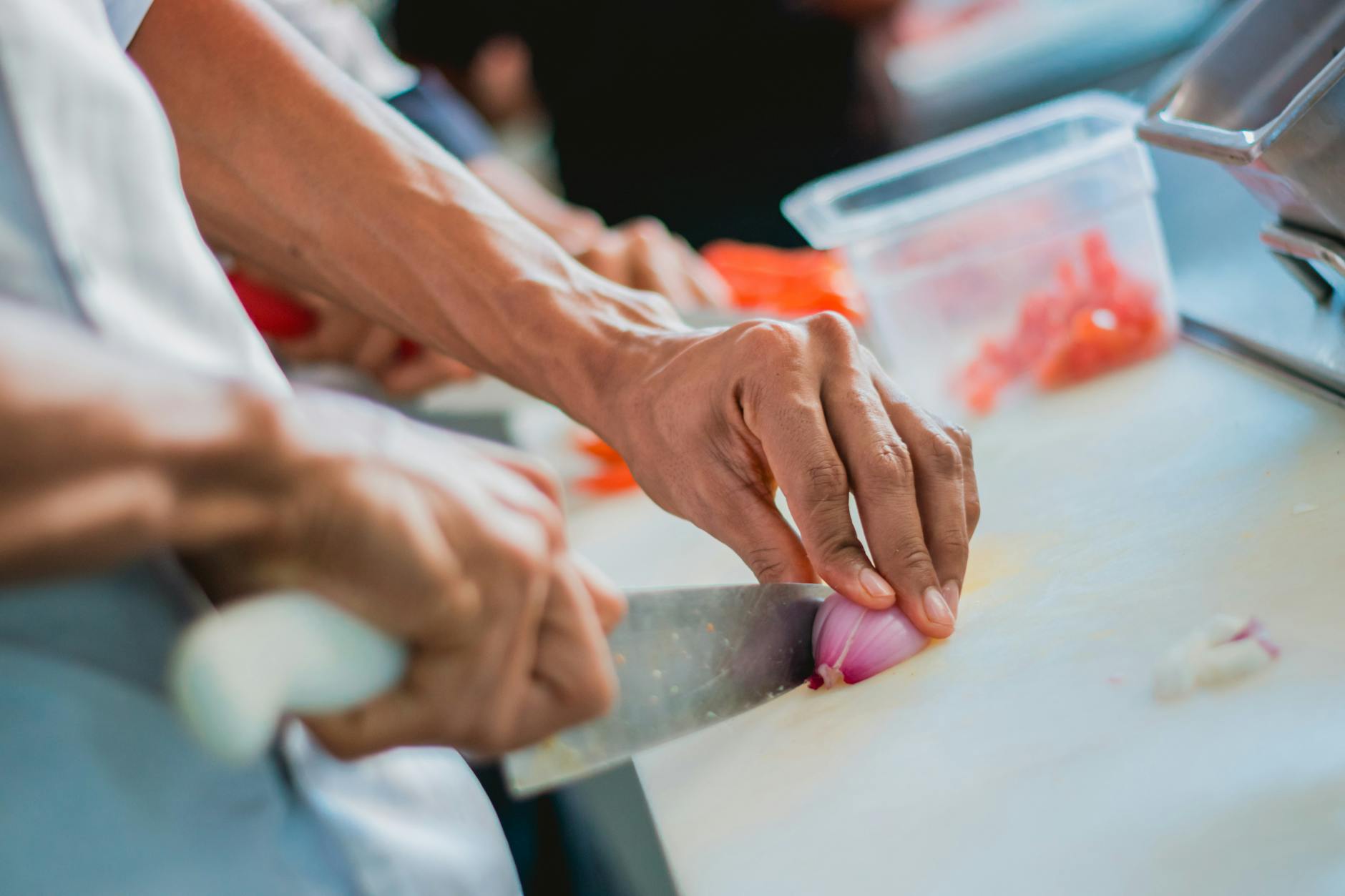
Proper knife skills improve both safety and efficiency in the kitchen. A sharp knife requires less pressure and gives you better control, reducing the risk of accidents while creating uniform cuts that cook evenly.
The foundation of knife work starts with the proper grip: pinch the blade between your thumb and forefinger just above the handle, with your remaining fingers wrapped around the handle. This “pinch grip” provides maximum control and leverage.
Develop these essential cuts first: julienne (matchstick), brunoise (small dice), and chiffonade (thin ribbons). These basic cooking techniques for beginners translate into professional-looking results and even cooking. Practice the rocking motion, keeping the knife tip in contact with the cutting board throughout the cut.
What about prep techniques beyond cutting? Mise en place – having everything in place before you start cooking – is equally important. Read the entire recipe, measure ingredients, and prepare all components before heating your first pan.
For dietary restrictions, knife skills become even more critical. When preparing gluten-free meals, use dedicated cutting boards and thoroughly clean knives between ingredients to prevent cross-contamination. The FDA provides comprehensive guidelines on preventing cross-contamination when cooking for food allergies.
Key Takeaway: Sharp knives are safer than dull ones. Invest in a good knife sharpener and maintain your blades regularly rather than struggling with dull edges.
French Cooking Techniques That Build Foundation Skills
French cooking techniques form the foundation of Western culinary training because they teach precision and understanding of cooking science. These methods aren’t complicated – they’re systematic approaches that build skills you’ll use across all types of cooking.
The five mother sauces demonstrate essential cooking techniques: béchamel teaches roux-making and sauce consistency, hollandaise covers emulsification, velouté shows stock integration, tomato sauce illustrates reduction, and espagnole combines multiple techniques. Master these, and you understand the building blocks of countless other sauces.
Emulsification techniques like making mayonnaise or vinaigrette teach you how to combine ingredients that naturally separate. Start with room-temperature ingredients, add oil drop by drop initially, then in a thin stream once the emulsion begins forming. Understanding this process helps you rescue broken sauces and create custom dressings.
How do you adapt French techniques for modern dietary needs? Many professional cooking techniques translate perfectly to plant-based cooking. Use cashew cream instead of dairy for béchamel-style sauces, or aquafaba for emulsions traditionally made with eggs.
Braising, a cornerstone French technique, works beautifully in small kitchens. Use a heavy pot that can go from stovetop to oven, brown your ingredients first, add liquid partially covering the food, then cook low and slow. This technique transforms tough, economical cuts into tender, flavorful meals.
Key Takeaway: French techniques teach you the “why” behind cooking, not just the “how.” Understanding the science helps you troubleshoot problems and adapt recipes confidently.
Cooking Techniques for Small Kitchens and Limited Space
Small kitchen cooking requires maximizing every tool and technique for efficiency. Focus on versatile methods that work across multiple cooking surfaces and don’t require specialized equipment.
One-pot techniques become essential in space-limited cooking. Master pasta cooking where you cook pasta directly in sauce, creating starchy, cohesive dishes without multiple pots. This technique works for risotto-style preparations, braised dishes, and even some grain-based meals.
Sheet pan cooking maximizes oven space while minimizing cleanup. Arrange ingredients by cooking time – start longer-cooking items like root vegetables, then add quicker-cooking proteins and tender vegetables in stages. Understanding heat zones on your sheet pan helps you cook multiple components simultaneously.
What about storage and prep in small spaces? Batch prep techniques become crucial. Spend time on weekends preparing base components: roasted vegetables, cooked grains, and basic proteins that you can combine throughout the week.
Steaming techniques work well in small spaces because they’re gentle and require minimal equipment. A bamboo steamer or even a makeshift steamer using a plate balanced on a bowl in a pot allows you to cook multiple components vertically, saving burner space.
Key Takeaway: In small kitchens, technique matters more than equipment. Master versatile methods that work with basic tools rather than accumulating single-use gadgets.
Troubleshooting Common Cooking Technique Mistakes
Most cooking failures stem from timing and temperature issues rather than technique complexity. Learning to identify and fix common problems builds confidence and helps you cook more intuitively.
Oversalted food can often be rescued by adding acid (lemon juice, vinegar) or sweetness (honey, sugar) to balance flavors. For soups and stews, add unsalted liquid or starchy ingredients like potatoes to absorb excess salt.
Broken emulsions happen when ingredients are too cold, added too quickly, or over-mixed. To fix mayonnaise or hollandaise, start fresh with a new egg yolk in a clean bowl, then gradually whisk in the broken sauce. For vinaigrettes, add a small amount of mustard or honey as an emulsifier.
Why do proteins turn out tough or dry? Usually from cooking at too high heat or for too long. Understanding carryover cooking – where internal temperature continues rising after removal from heat – helps you pull proteins at the right moment.
Burned food often results from inadequate preparation or wrong heat levels. If you burn garlic or spices, start over – burned aromatics create bitter flavors throughout the dish. The Institute of Food Technologists regularly publishes research on how heat affects food chemistry and flavor development.
For lumpy sauces, strain through a fine-mesh sieve or use an immersion blender. Prevention works better: always whisk constantly when adding flour to liquid, and temper hot liquids gradually into egg-based sauces.
Key Takeaway: Most cooking mistakes are fixable if you understand what went wrong. Keep tasting and adjusting rather than following recipes blindly.
Meal Prep and Batch Cooking Techniques
Effective meal prep relies on understanding which techniques and ingredients hold up well over time. Not all cooking methods work for advance preparation, but strategic batch cooking can save hours during busy weeks.
Roasted vegetables maintain their texture better than sautéed ones when reheated. Roast large batches of root vegetables, Brussels sprouts, and cauliflower at high heat until slightly underdone – they’ll finish cooking when reheated.
Braised dishes actually improve over time as flavors meld. Prepare large batches of braised chicken thighs, beef stews, or bean-based dishes that can serve as bases for multiple meals throughout the week.
Which grains and proteins work best for batch cooking? Cook grains like quinoa, brown rice, and farro in large quantities – they refrigerate well and can be quickly reheated with added liquid. For proteins, poached chicken, slow-cooked pulled pork, and hard-boiled eggs provide versatile bases for different dishes.
Make-ahead sauces and dressings tie batch-cooked components together. Prepare basic vinaigrettes, tahini sauce, and herb oils that can transform simple combinations of prepped ingredients into complete meals.
Freezing techniques extend your meal prep timeline. Most braised dishes, soups, and cooked grains freeze well for up to three months. Cool completely before freezing, and leave expansion room in containers.
Key Takeaway: Focus on preparing versatile components rather than complete meals. This approach provides more flexibility while reducing repetitive eating.
Seasonal Cooking Techniques and Ingredient Adaptation
Adapting cooking techniques to seasonal ingredients maximizes flavor while working with what’s readily available. Different seasons call for different approaches based on ingredient characteristics and desired comfort levels.
Winter cooking emphasizes longer, slower techniques that build warmth and richness. Braising, roasting, and slow-simmering work well with hardy root vegetables and preserved ingredients. These methods extract maximum flavor from storage vegetables and tougher cuts of meat.
Summer techniques focus on preserving freshness and avoiding excess heat in the kitchen. Quick sautés, raw preparations, grilling, and no-cook techniques highlight peak-season produce without overwhelming delicate flavors.
How do you adapt techniques when ingredients aren’t available? Understanding ingredient functions helps with substitutions. If a recipe calls for summer tomatoes in winter, use cooking techniques that concentrate flavor – roasting canned tomatoes or making long-simmered sauces rather than raw applications.
Fall and spring offer transitional ingredients that work with various techniques. Adapt your basic cooking techniques by adjusting cooking times and temperatures based on ingredient maturity and density.
Preservation techniques extend seasonal abundance. Learn basic pickle-making, herb preservation in oil, and simple fermentation to capture peak flavors for later use.
Key Takeaway: Flexibility in technique allows you to work with any ingredient. Focus on understanding what each cooking method contributes rather than following rigid seasonal rules.
Cooking Techniques for Dietary Restrictions
Adapting fundamental cooking techniques for dietary restrictions often improves results for everyone. Many modifications enhance flavors and textures while meeting specific nutritional needs.
Gluten-free cooking requires understanding alternative thickening and binding agents. Use cornstarch, arrowroot, or reduction techniques for sauces instead of wheat flour roux. For binding, ground flax, chia seeds, or additional eggs work in many applications.
Dairy-free cooking benefits from understanding fat functionality. Coconut milk provides richness for braised dishes, while good olive oil adds body to vegetable preparations. Nutritional yeast contributes umami depth that cheese typically provides.
What about low-sodium cooking techniques? Focus on building flavor through browning, acid, and aromatic techniques. Properly caramelized onions, well-reduced stocks, and strategic use of citrus and vinegar create satisfying flavors without relying on salt.
Vegetarian and vegan techniques often improve texture through proper seasoning and cooking methods. Learn to develop umami through mushroom cooking, miso integration, and proper caramelization of vegetables.
For sugar-free cooking, understand how to use fruit purées, spice combinations, and acid-balance techniques to create satisfying flavors without added sweeteners.
Key Takeaway: Dietary restrictions often push you to become a better cook by focusing on fundamental flavor-building techniques rather than relying on single ingredients.
Building Your Cooking Technique Library
Developing cooking skills is an ongoing process that builds upon fundamental techniques. Start with basic cooking techniques and gradually expand your repertoire based on your interests and cooking goals.
Begin with the cooking techniques list that appears most frequently in your desired cuisine style. If you love Italian food, master pasta cooking, simple sauces, and vegetable preparations. For Asian cuisines, focus on stir-frying, steaming, and sauce balancing.
Practice techniques systematically rather than jumping between methods randomly. Spend several weeks perfecting sautéing before moving to braising. This focused approach builds muscle memory and confidence.
How do you know when you’ve mastered a technique? You can execute it consistently without referring to recipes and adapt it to different ingredients. You understand what can go wrong and how to fix problems when they arise.
Document your learning process. Keep notes about timing, temperatures, and results. This personal reference becomes invaluable as you develop your cooking intuition.
For those interested in formal study, many basic cooking techniques pdf resources and cooking techniques book options provide structured learning paths. However, hands-on practice remains more valuable than theoretical knowledge.
Key Takeaway: Consistency comes from repetition and understanding. Master a few techniques completely rather than attempting every method superficially.
Frequently Asked Questions
What are the most important cooking techniques for beginners? Start with sautéing, roasting, and basic knife skills. These three techniques allow you to prepare a wide variety of meals and build confidence in the kitchen.
How long does it take to master basic cooking techniques? With regular practice, you can become comfortable with fundamental techniques in 2-3 months. True mastery develops over years as you learn to adapt techniques to different ingredients and situations.
Do I need expensive equipment to learn proper cooking techniques? No. A sharp knife, cutting board, heavy-bottomed pan, and basic pot will handle most essential techniques. Focus on technique development rather than equipment accumulation.
What’s the difference between cooking techniques and recipes? Techniques teach you how to manipulate ingredients and heat to achieve desired results. Recipes are specific applications of techniques. Understanding techniques allows you to cook without recipes.
How do professional cooking techniques differ from home cooking? Professional techniques emphasize speed, consistency, and volume production. Home cooks can focus more on flavor development and have more flexibility with timing and presentation.
Which cooking techniques work best for meal planning? Roasting, braising, and grain cooking techniques produce results that improve over time and reheat well. These methods form the foundation of effective meal preparation strategies.
Can you learn cooking techniques from books and videos alone? While books and videos provide valuable information, cooking techniques require hands-on practice. Use resources for guidance, but expect to develop skills through actual cooking experience.
Further reading: See FDA food safety, and Serious Eats techniques.
Related reading: Cooking Techniques: Master 2026 Methods for.
Related reading: Cooking Techniques: Master Essential Methods in.